
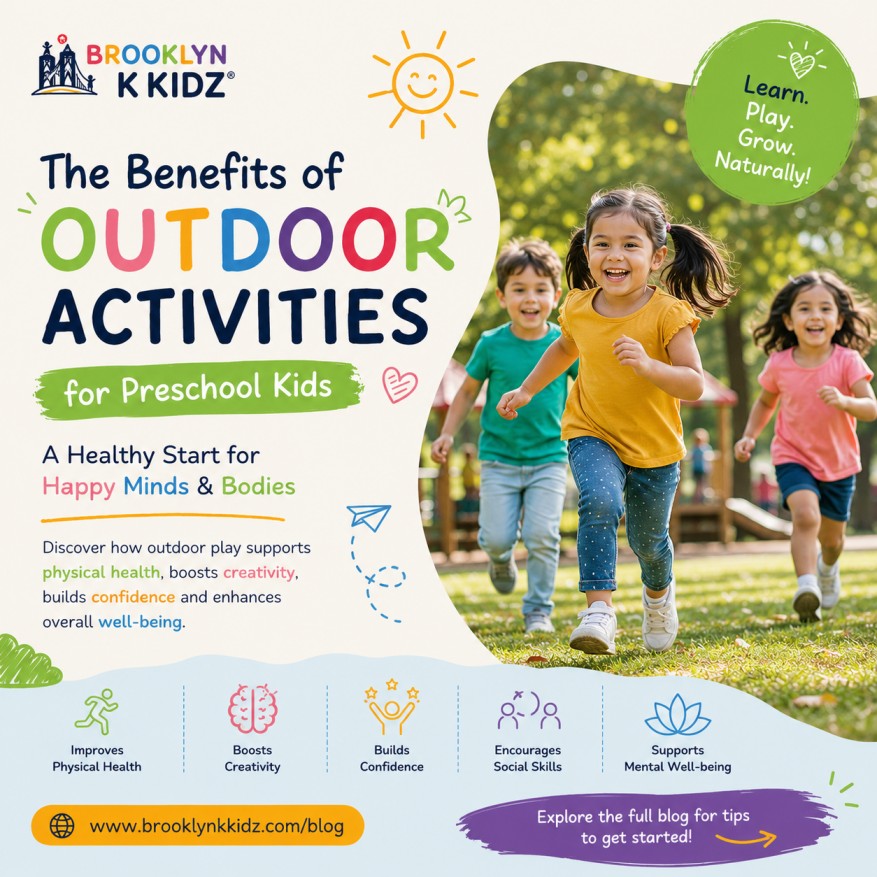
In today’s digital world, many children spend more time indoors using mobile phones, tablets, and television. While technology can be useful in moderation, young children also need time to run, explore, play, and connect with nature.
Outdoor activities are not just about fun—they are an important part of a child’s physical, emotional, social, and intellectual development.
Whether it’s running in a park, playing with friends, observing nature, or participating in outdoor games, these experiences help children learn naturally while staying active and healthy.
Why Outdoor Play Matters in Early Childhood
The early years of childhood are extremely important for brain development. During this stage, children learn best through movement, exploration, and real-life experiences.
Outdoor activities encourage children to:
- Develop confidence
- Improve communication skills
- Build creativity
- Strengthen physical health
- Learn teamwork and social interaction
Children become more curious and active when they interact with the world around them.
💪 1. Improves Physical Health
Outdoor play keeps children physically active and helps improve their overall fitness.
Activities like:
- Running
- Jumping
- Climbing
- Cycling
- Playing games
help strengthen muscles, improve body balance, and develop coordination.
Regular outdoor activities also reduce the risk of:
- Obesity
- Poor posture
- Low physical activity habits
Healthy movement is essential for growing children.
🧠 2. Supports Brain Development
Outdoor environments provide children with new experiences that stimulate their brains.
Simple activities like:
- Observing birds
- Playing with sand
- Exploring plants
- Nature walks
encourage problem-solving, creativity, and critical thinking.
Children learn faster when they actively explore rather than simply watching screens indoors.
😊 3. Improves Emotional Well-Being
Outdoor play helps reduce stress and improves mood in children.
Fresh air, sunlight, and free movement help children feel:
- Happier
- More relaxed
- More confident
Outdoor activities also help children manage emotions and develop a positive mindset.
🤝 4. Builds Social Skills
When children play outdoors together, they naturally learn how to:
- Share
- Communicate
- Take turns
- Solve conflicts
- Work as a team
These social interactions help children build friendships and improve their confidence around others.
🎨 5. Encourages Creativity & Imagination
Nature inspires imagination in children.
A simple outdoor space can become:
- A jungle adventure
- A treasure hunt
- A pretend playground
- A learning experience
Outdoor play allows children to think freely and use their creativity without limitations.
Outdoor Activities vs Excessive Screen Time
Today, one of the biggest challenges parents face is excessive screen time.
Spending too much time on mobile phones or tablets may affect:
- Attention span
- Sleep quality
- Physical activity
- Communication skills
Outdoor activities provide a healthy balance and encourage children to engage with the real world instead of staying connected only to screens.
Best Outdoor Activities for Preschool Children
Here are some simple and enjoyable outdoor activities for young kids:
⚽ Outdoor Games
Games like catch, football, and running races improve fitness and teamwork.
🌲 Nature Walks
Nature walks help children observe plants, birds, insects, and different colors around them.
🚲 Cycling
Cycling improves balance, coordination, and confidence.
🏖️ Sand & Water Play
Playing with sand and water supports sensory learning and creativity.
🎨 Outdoor Art Activities
Drawing or painting outdoors makes learning more exciting and interactive.
How Parents Can Encourage Outdoor Play
Parents can support healthy outdoor habits by:
- Limiting screen time
- Taking children to parks regularly
- Participating in outdoor games together
- Encouraging exploration and curiosity
- Creating a daily outdoor routine
Even 30–60 minutes of outdoor play daily can make a big difference in a child’s development.
Role of Preschool in Outdoor Learning
A good preschool understands the importance of outdoor learning experiences.
Play-based preschools often include:
- Outdoor games
- Group activities
- Nature exploration
- Physical movement sessions
These activities help children stay active while developing important life skills naturally.
💡 Final Thoughts
Outdoor activities are much more than simple playtime—they are a powerful part of healthy childhood development.
When children spend time outdoors, they become more active, creative, confident, and socially connected. These experiences support both physical and mental growth while making childhood more joyful and meaningful.
By encouraging regular outdoor play, parents can help children build healthier habits and stronger developmental skills from an early age.
Frequently Asked Questions (FAQs):
1. Why are outdoor activities important for preschool children?
Outdoor activities support physical health, brain development, creativity, emotional well-being, and social skills in young children.
2. How much outdoor playtime does a preschool child need?
Experts recommend at least 30–60 minutes of outdoor play daily for healthy growth and development.
3. Can outdoor play improve a child’s communication skills?
Yes. Outdoor group activities encourage children to talk, share, cooperate, and interact confidently with others.
4. What are the best outdoor activities for preschoolers?
Nature walks, cycling, outdoor games, sand play, water play, and playground activities are excellent for preschool children.
5. How does outdoor play reduce screen addiction?
Outdoor activities keep children physically and mentally engaged, reducing dependency on mobile phones, tablets, and television.