
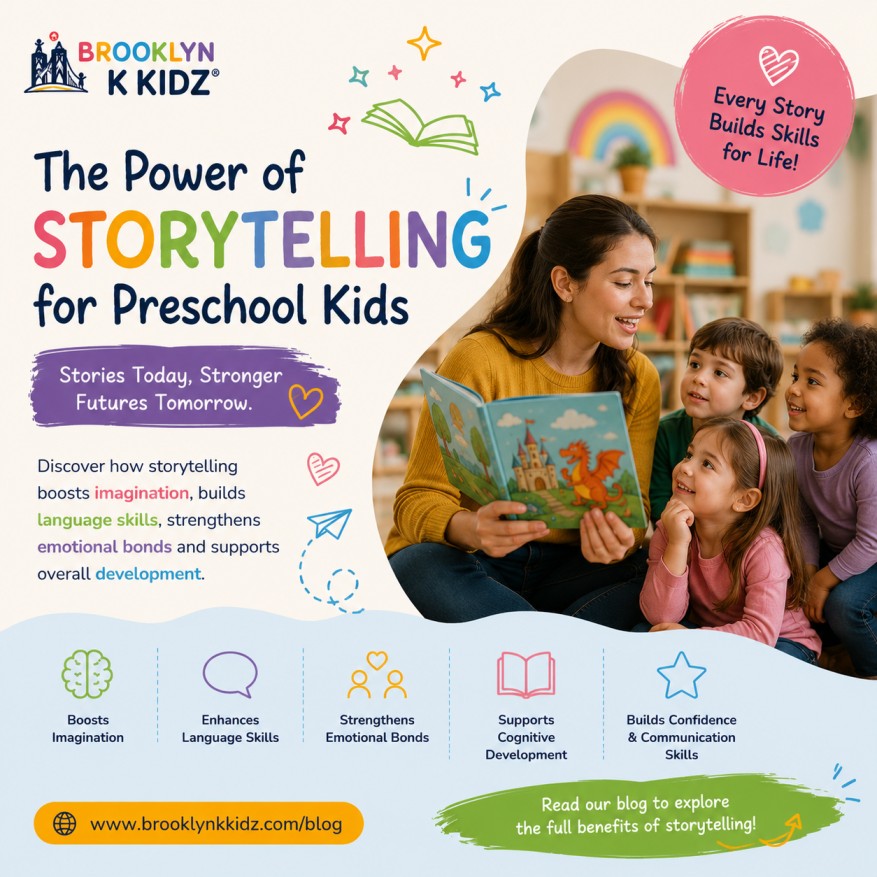
Stories have always been a powerful way to teach, inspire, and connect with children. From bedtime stories to classroom storytelling sessions, children naturally enjoy listening to interesting characters, adventures, and emotions.
But storytelling is much more than entertainment—it plays an important role in developing a child’s communication, imagination, confidence, and listening skills.
In early childhood, storytelling helps children understand language naturally while making learning fun and interactive.
Why Communication Skills Matter in Early Childhood
Communication is one of the most important life skills children develop during their early years.
Good communication helps children:
- Express thoughts clearly
- Build confidence
- Understand emotions
- Interact socially
- Improve learning ability
Children who communicate confidently often perform better socially and academically.
How Storytelling Helps Children Learn
Storytelling creates an engaging environment where children actively listen, imagine, and respond.
Unlike traditional learning methods, storytelling captures a child’s attention emotionally and mentally, making learning more effective and enjoyable.
Children remember lessons better when they are connected to stories and emotions.
🗣️ 1. Improves Vocabulary & Language Skills
Listening to stories introduces children to new words, sentence structures, and expressions.
Over time, children begin using these words naturally in conversations, improving their speaking ability and vocabulary.
Storytelling also helps children pronounce words more clearly and confidently.
👂 2. Enhances Listening Skills
When children listen carefully to stories, they learn how to:
- Focus on details
- Understand sequences
- Follow instructions
- Improve concentration
Strong listening skills are essential for both communication and classroom learning.
🎨 3. Boosts Imagination & Creativity
Stories encourage children to imagine different characters, places, and situations.
This develops:
- Creativity
- Curiosity
- Emotional understanding
Children begin thinking beyond their surroundings and become more expressive.
😊 4. Builds Confidence
Encouraging children to tell stories or answer questions during storytelling sessions improves their confidence.
Children learn to:
- Speak in front of others
- Express ideas freely
- Communicate without fear
Positive encouragement helps shy children become more comfortable socially.
🤝 5. Strengthens Emotional & Social Understanding
Stories teach children about:
- Kindness
- Friendship
- Sharing
- Empathy
- Problem-solving
Children begin understanding emotions and social behavior through relatable characters and situations.
How Parents Can Encourage Storytelling at Home
Parents can make storytelling part of daily life by:
- Reading bedtime stories
- Asking children questions
- Encouraging kids to create stories
- Using picture books
- Acting out characters together
Even 15–20 minutes of storytelling daily can significantly improve communication skills.
Storytelling vs Excessive Screen Time
Many children today spend more time watching videos than listening to stories.
Unlike passive screen watching, storytelling encourages:
- Active thinking
- Imagination
- Communication
- Emotional connection
Interactive storytelling supports healthier brain development and stronger language skills.
💡 Final Thoughts
Storytelling is one of the simplest yet most powerful ways to improve a child’s communication skills naturally.
It helps children become more confident, expressive, creative, and emotionally aware while making learning joyful and meaningful.
By encouraging storytelling at home and in preschool, parents can support healthy language development from an early age.
Frequently Asked Questions (FAQs):
1. Why is storytelling important for preschool children?
Storytelling improves communication, listening, creativity, vocabulary, and emotional understanding.
2. How does storytelling improve communication skills?
Children learn new words, sentence structures, and confidence through listening and speaking activities.
3. How much storytelling time is ideal daily?
Around 15–20 minutes of storytelling daily is beneficial for preschool children.
4. Can storytelling improve concentration in kids?
Yes. Listening to stories helps children focus, remember details, and improve attention span.
5. Is storytelling better than screen time?
Interactive storytelling supports imagination, communication, and emotional development better than excessive screen exposure.