
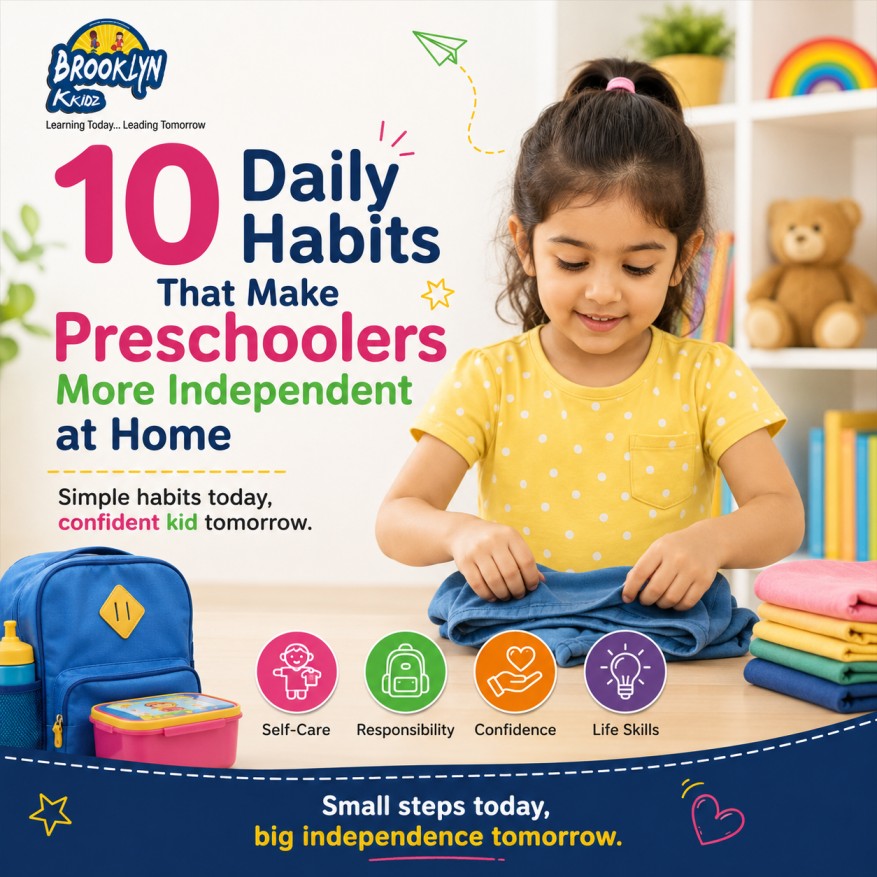
10 Daily Habits That Make Preschoolers More Independent at Home
One of the greatest gifts parents can give their children is the confidence to do things on their own. Independence doesn’t develop overnight—it grows through small, consistent habits practiced every day. During the preschool years, children are naturally curious and eager to explore the world around them. This is the perfect time to encourage them to take responsibility for simple daily tasks while building confidence, resilience, and problem-solving skills.
At Brooklyn Kkidz, we believe that developing independence is just as important as learning numbers, letters, and colors. When children are encouraged to make choices, solve small problems, and complete age-appropriate tasks, they become more confident learners both at home and in the classroom.
Here are ten daily habits that can help your preschooler become more independent while making everyday life easier for the whole family.
Encourage Your Child to Dress Independently
Allow your preschooler to choose their clothes from a few weather-appropriate options and encourage them to dress themselves each morning. They may struggle with buttons or zippers initially, but every attempt strengthens fine motor skills and boosts self-confidence. Instead of rushing to help, give them enough time to complete the task at their own pace. Celebrating small successes motivates children to keep trying.
Let Them Pack Their Own School Bag
Packing a school bag may seem like a simple task, but it teaches children responsibility and organization. Parents can prepare a checklist while allowing their child to place their water bottle, lunch box, notebook, and other essentials inside the bag. This daily habit helps preschoolers understand the importance of being prepared.
Create a Simple Morning Routine
Children thrive on routines because they know what to expect. A consistent morning routine that includes brushing teeth, washing their face, getting dressed, eating breakfast, and packing up for school gives children a sense of responsibility and control. Following the same sequence every day also improves time management skills from an early age.
Encourage Cleaning Up After Playtime
After finishing a game or activity, encourage your child to put toys, books, puzzles, and art supplies back in their designated places. Rather than treating cleanup as a chore, make it part of the play experience. Over time, children naturally develop habits of responsibility, organization, and respect for their belongings.
Allow Them to Help with Small Household Tasks
Young children enjoy feeling helpful. Simple responsibilities like watering plants, placing napkins on the dining table, arranging cushions, or sorting laundry by color make them feel valued. These everyday tasks teach teamwork, discipline, and accountability while strengthening family bonds.
Let Them Make Small Decisions
Decision-making is an essential life skill that begins during early childhood. Offer simple choices such as selecting between two healthy snacks, choosing a bedtime story, or deciding which educational activity they would like to complete first. Making age-appropriate decisions helps children become more confident and encourages independent thinking.
Teach Self-Feeding and Mealtime Responsibility
Preschoolers should gradually learn to eat independently using child-friendly utensils. Encourage them to serve small portions, clean up small spills, and place their dishes in the sink after meals. These simple responsibilities foster confidence and help children become more self-reliant in their daily routines.
Encourage Problem-Solving Before Offering Help
It’s natural for parents to want to solve every problem immediately, but allowing children a few moments to think independently helps develop critical thinking skills. Whether they are completing a puzzle, building blocks, or figuring out how to wear their shoes, gentle encouragement is often more valuable than providing the answer. Children learn perseverance when they discover solutions on their own.
Develop Good Personal Hygiene Habits
Simple habits such as washing hands before meals, brushing teeth twice a day, combing hair, and putting dirty clothes in the laundry basket help children understand the importance of self-care. Consistency transforms these activities into lifelong healthy habits while increasing their sense of independence.
End Every Day with Reflection and Appreciation
Before bedtime, spend a few minutes talking with your child about their day. Ask what they enjoyed, what they learned, and what they accomplished independently. Recognizing their efforts rather than focusing only on results builds self-esteem and encourages children to continue developing new skills each day.
How Brooklyn Kkidz Encourages Independence
At Brooklyn Kkidz, independence is woven into every aspect of our learning environment. Through play-based learning, structured classroom routines, creative activities, and hands-on experiences, children are encouraged to make choices, solve problems, communicate confidently, and take responsibility for age-appropriate tasks. Our experienced educators provide guidance while allowing every child the freedom to learn at their own pace, helping them develop confidence that lasts well beyond their preschool years.
Final Thoughts
Helping preschoolers become independent isn’t about expecting perfection—it’s about giving them opportunities to learn through everyday experiences. Every small task they complete on their own strengthens their confidence, responsibility, and ability to solve problems independently. Parents and teachers working together can create an environment where children feel capable, valued, and ready to embrace new challenges.
At Brooklyn Kkidz, we believe that every independent step a child takes today lays the foundation for lifelong learning, resilience, and success. By encouraging these daily habits at home and reinforcing them in the classroom, families can nurture confident, happy, and self-reliant children who are prepared for the exciting journey ahead.
Frequently Asked Questions (FAQs):
1. At what age should children start becoming independent?
Children begin developing independence between the ages of two and five through simple daily routines such as dressing, eating, cleaning up toys, and making small decisions.
2.How can parents encourage independence without putting pressure on children?
Parents should provide guidance, allow children enough time to complete tasks, praise their effort, and avoid stepping in too quickly when challenges arise.
3.Why is independence important before starting primary school?
Independent children are often more confident, adaptable, and willing to participate in classroom activities. They are better prepared to solve problems, communicate with others, and manage everyday responsibilities.
4.How does Brooklyn Kkidz help children become independent?
Brooklyn Kkidz encourages independence through play-based learning, structured routines, hands-on activities, collaborative learning, and positive reinforcement that builds confidence in every child.