
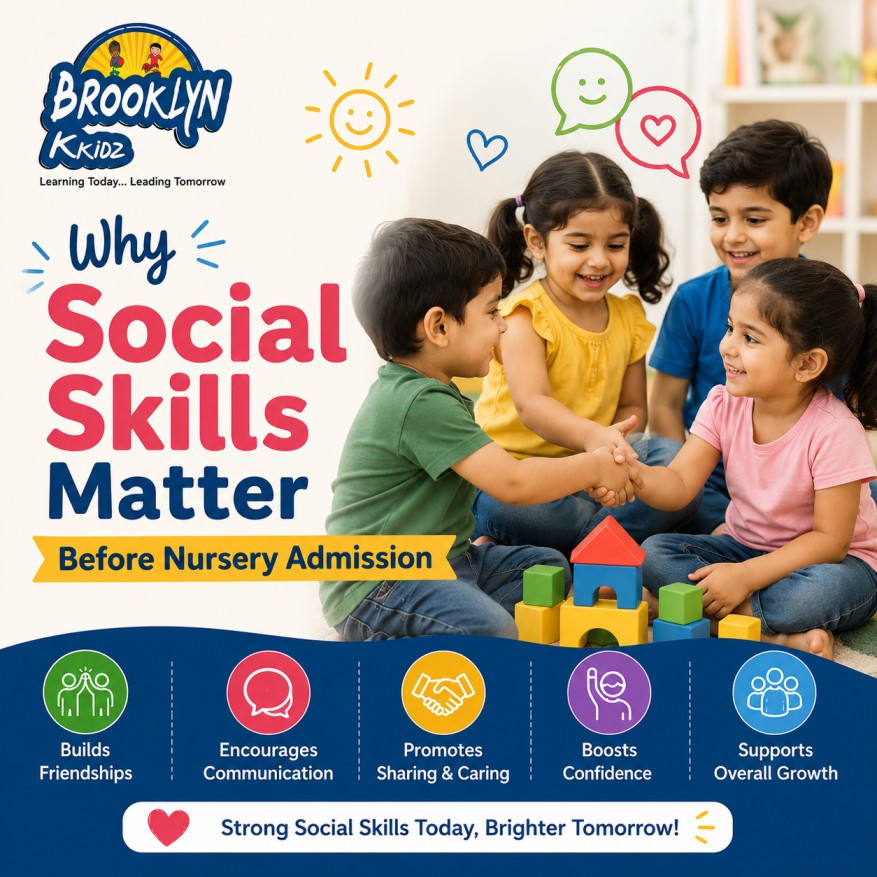
Why Social Skills Matter Before Nursery Admission
Starting nursery is one of the biggest milestones in a child’s early years. It marks the beginning of a journey where children learn, explore, communicate, and build relationships outside the comfort of their homes. While parents often focus on teaching alphabets, numbers, and colors before nursery admission, one equally important aspect is often overlooked—social skills.
Social skills form the foundation of a child’s emotional, cognitive, and academic development. A child who can communicate, cooperate, share, and express emotions confidently is more likely to enjoy school and adapt quickly to a new environment. These skills help children build friendships, develop self-confidence, and become active participants in classroom activities.
At Brooklyn Kkidz, we believe that every child deserves a nurturing environment where social development is encouraged through meaningful interactions, play-based learning, and positive experiences. Before children begin their nursery journey, strengthening their social skills can make the transition smoother and more enjoyable.
Understanding Social Skills in Early Childhood
Social skills are the abilities that help children communicate effectively, understand emotions, cooperate with others, and build healthy relationships. These skills begin developing during infancy and continue to grow through daily interactions with parents, siblings, caregivers, and peers.
As children approach nursery age, they begin learning how to express their needs, take turns, listen to others, solve simple conflicts, and work together during play. These experiences prepare them for classroom life, where collaboration and communication become part of everyday learning.
Social Skills Build Confidence
Children who are comfortable interacting with others generally feel more confident when entering a new environment. Instead of feeling overwhelmed, they are more willing to participate in classroom activities, introduce themselves, ask questions, and explore new experiences.
Confidence grows when children experience positive interactions with teachers and classmates. As they receive encouragement and appreciation, they become more independent and eager to learn.
Communication Helps Children Express Their Needs
Many preschoolers struggle during the first few weeks of nursery because they find it difficult to communicate their feelings or needs. Developing basic communication skills before admission helps children express when they need help, want water, feel uncomfortable, or wish to join an activity.
Strong communication also reduces frustration and supports emotional well-being by allowing children to express themselves confidently.
Learning to Share and Cooperate
Nursery classrooms encourage children to participate in group activities where toys, learning materials, and play spaces are shared. Children who understand the importance of taking turns and cooperating with others adjust more easily to classroom routines.
Sharing teaches patience, kindness, empathy, and respect—qualities that contribute to positive social relationships throughout life.
Emotional Intelligence Supports Better Relationships
Children experience a wide range of emotions every day. Learning how to recognize feelings such as happiness, excitement, sadness, disappointment, and frustration helps them understand both themselves and others.
Emotionally aware children are more likely to show empathy, resolve conflicts peacefully, and build lasting friendships. These emotional skills create a positive classroom atmosphere where every child feels respected and included.
Team Activities Encourage Collaboration
Many nursery learning experiences involve group games, storytelling sessions, music, dance, art projects, and outdoor play. Participating in these activities teaches children how to work together toward a common goal while respecting different ideas and perspectives.
Collaborative learning also develops leadership, listening skills, creativity, and problem-solving abilities that benefit children throughout their educational journey.
Positive Social Skills Improve Classroom Readiness
Nursery is about much more than academic learning. Children spend a significant portion of their day interacting with teachers and classmates. Those with strong social skills often adapt more quickly to routines, follow classroom instructions, participate confidently, and enjoy learning with others.
These positive experiences contribute to improved concentration, better classroom behavior, and a lifelong love for learning.
How Parents Can Encourage Social Skills at Home
Social development begins long before nursery admission. Parents can encourage conversations during meals, organize playdates with other children, read interactive storybooks, involve children in family discussions, and create opportunities for cooperative play.
Allowing children to make simple decisions, express emotions freely, and practice good manners also helps build confidence and emotional maturity.
How Brooklyn Kkidz Nurtures Social Development
At Brooklyn Kkidz, we believe children learn best through interaction, exploration, and meaningful experiences. Our play-based curriculum is carefully designed to encourage teamwork, communication, creativity, and emotional growth.
Through storytelling, role play, music, dance, group activities, creative projects, and guided classroom experiences, children naturally develop the confidence to communicate, share, cooperate, and build friendships. Our experienced educators create a warm and welcoming environment where every child feels valued, supported, and encouraged to express themselves.
Final Thoughts
Preparing your child for nursery goes beyond teaching early academics. Social skills provide the confidence children need to interact, communicate, solve problems, and develop meaningful relationships. These abilities not only make the transition into nursery easier but also establish the foundation for future academic success and emotional well-being.
By encouraging positive interactions at home and choosing a preschool that values holistic child development, parents can help their children begin their educational journey with confidence and enthusiasm.
At Brooklyn Kkidz, we are committed to helping every child develop the social and emotional skills they need to thrive in nursery and beyond.
Frequently Asked Questions (FAQs):
1. Why are social skills important before nursery admission?
Social skills help children communicate, build friendships, share with others, and adjust confidently to the nursery environment.
2. What social skills should a child develop before starting nursery?
Children should learn basic communication, sharing, taking turns, following simple instructions, expressing emotions, and interacting respectfully with peers.
3. How can parents improve their child's social skills at home?
Parents can encourage conversations, organize playdates, read storybooks together, involve children in family activities, and provide opportunities for cooperative play.
4. Does good social development improve school readiness?
Yes. Children with strong social skills adapt more easily to classroom routines, participate actively in learning, and develop better relationships with teachers and classmates.
5. How does Brooklyn Kkidz help children develop social skills?
Brooklyn Kkidz promotes social development through play-based learning, group activities, storytelling, role play, music, collaborative games, and a nurturing classroom environment where every child feels confident and included.