
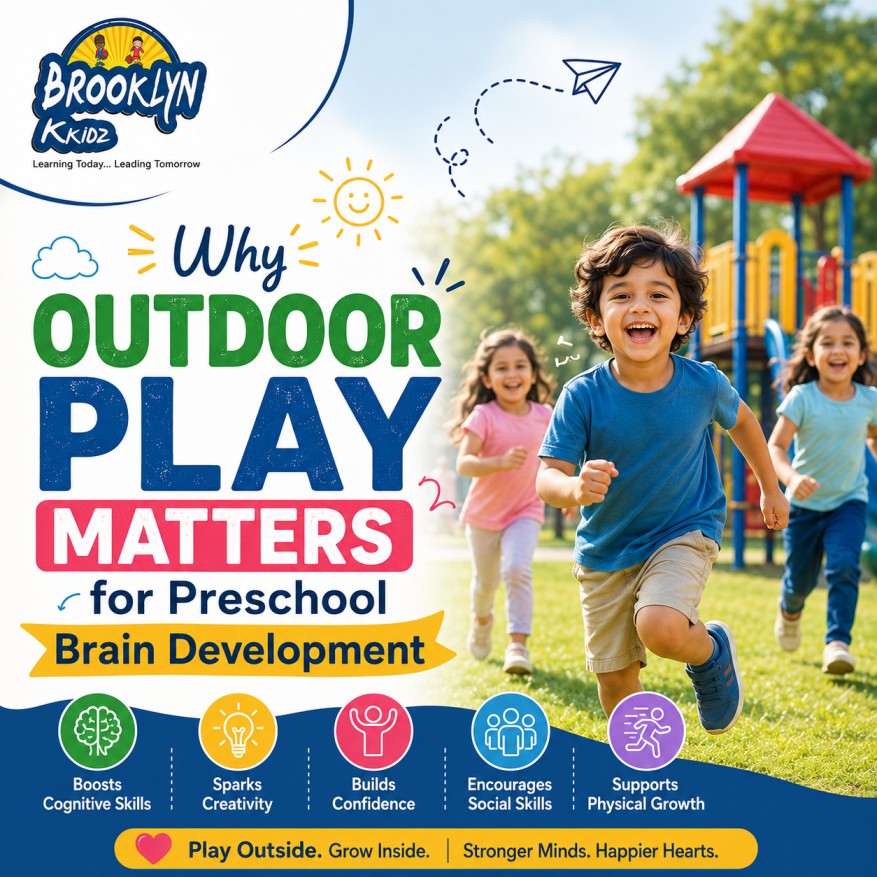
Why Outdoor Play Is Essential for Preschool Children’s Brain Development
In today’s digital world, children are spending more time indoors than ever before. While educational toys, television, and digital learning tools have their place, nothing can replace the benefits of outdoor play during the early years of childhood. Running across a playground, exploring nature, climbing, jumping, and playing with friends are not simply fun activities—they are powerful experiences that shape a child’s developing brain.
The preschool years are a critical period for brain development. During this stage, children rapidly build connections that influence their thinking, creativity, communication, emotional well-being, and physical abilities. Outdoor play stimulates these areas naturally, helping children become confident learners who are eager to explore the world around them.
At Brooklyn Kkidz, outdoor learning is an essential part of our curriculum because we believe children learn best when they are active, curious, and engaged with their surroundings.
The Science Behind Outdoor Play and Brain Development
A child’s brain develops through experiences. Every movement, conversation, discovery, and challenge creates new neural connections that strengthen learning. Outdoor environments provide endless opportunities for children to observe, experiment, and solve problems in real-life situations.
Whether a child is balancing on playground equipment, chasing bubbles, collecting leaves, or watching insects, the brain is continuously processing information, improving memory, attention, coordination, and decision-making skills.
Regular outdoor experiences encourage healthy brain growth while making learning enjoyable and meaningful.
Physical Activity Strengthens Cognitive Development
Movement plays a significant role in brain development. Activities such as running, jumping, climbing, skipping, and balancing increase blood circulation to the brain, supplying oxygen and nutrients that support healthy cognitive function.
As children strengthen their bodies, they also improve concentration, memory, coordination, and problem-solving abilities. Physical movement enhances the brain’s ability to process information, making children more prepared for classroom learning.
Outdoor play naturally combines exercise with exploration, creating the perfect environment for holistic development.
Nature Sparks Curiosity and Creativity
The natural world offers endless opportunities for imagination. A simple walk through a garden can become an exciting adventure where children observe butterflies, collect colorful leaves, listen to birds, or create stories inspired by nature.
Unlike structured indoor activities, outdoor environments encourage open-ended play. Children invent games, build imaginary worlds, ask questions, and explore different possibilities without limitations.
These experiences strengthen creativity, innovation, and independent thinking—skills that continue to benefit children throughout their education.
Outdoor Play Improves Focus and Attention
Children naturally have high levels of energy. Outdoor play provides a healthy outlet that allows them to release energy while improving their ability to concentrate afterward.
Research has shown that children who spend time outdoors often return to classroom activities feeling calmer, more focused, and ready to learn. Exposure to natural environments reduces stress and supports emotional regulation, making it easier for children to pay attention during lessons.
For preschoolers, regular outdoor play creates the ideal balance between active exploration and focused learning.
Social Interaction Builds Emotional Intelligence
Outdoor activities provide opportunities for children to play together, communicate, cooperate, and solve problems as a team. Whether they are sharing playground equipment, playing group games, or building sandcastles, children learn valuable social skills through interaction.
These experiences teach empathy, patience, leadership, negotiation, and conflict resolution. As children build friendships and communicate effectively, they develop emotional intelligence that supports both academic and personal success.
Sensory Experiences Enhance Brain Connections
The outdoors stimulates every sense. Children feel different textures, hear natural sounds, smell flowers, observe changing colors, and experience varying temperatures.
These rich sensory experiences strengthen neural pathways responsible for learning, language development, memory, and critical thinking. Sensory exploration also supports fine and gross motor development while helping children better understand the world around them.
Outdoor play provides learning opportunities that cannot be replicated through screens or traditional classroom activities alone.
Outdoor Learning Encourages Confidence and Independence
Every outdoor adventure presents new challenges. Whether climbing a small structure, balancing across stepping stones, or exploring unfamiliar spaces, children gradually develop confidence in their abilities.
Successfully overcoming small challenges teaches resilience and encourages children to take healthy risks within a safe environment. This growing confidence carries over into classroom learning, communication, and everyday problem-solving.
Children who regularly explore outdoors often become more independent, adaptable, and willing to try new experiences.
How Brooklyn Kkidz Makes Outdoor Learning Meaningful
At Brooklyn Kkidz, outdoor play is more than just recreation—it is an important part of every child’s learning journey. Our carefully planned outdoor activities combine movement, exploration, creativity, and social interaction to promote overall development.
Children participate in nature walks, group games, obstacle activities, storytelling sessions, creative outdoor projects, and sensory exploration that stimulate curiosity while strengthening physical, emotional, and cognitive development.
Our safe and child-friendly outdoor spaces encourage children to discover, imagine, collaborate, and learn through joyful experiences every day.
Final Thoughts
Outdoor play is one of the most valuable learning experiences a preschool child can have. It strengthens brain development, encourages creativity, improves focus, supports emotional well-being, and builds lifelong confidence.
As parents, providing opportunities for outdoor exploration every day can have a lasting impact on your child’s growth and development. Choosing a preschool that values outdoor learning ensures children receive the balanced experiences they need to thrive.
At Brooklyn Kkidz, we believe every outdoor adventure becomes a stepping stone toward confident, curious, and happy lifelong learners.
Frequently Asked Questions (FAQs):
1. Why is outdoor play important for preschool brain development?
Outdoor play stimulates brain growth by improving memory, concentration, creativity, problem-solving, and cognitive development through active exploration.
2. How much outdoor play should preschool children have daily?
Experts recommend that preschoolers spend at least 60 to 120 minutes engaging in active outdoor play each day whenever possible.
3. Can outdoor play improve a child's learning abilities?
Yes. Outdoor activities improve attention span, language development, critical thinking, creativity, and classroom readiness.
4. What outdoor activities are best for preschoolers?
Nature walks, running, climbing, ball games, obstacle courses, gardening, sensory exploration, and imaginative play all support healthy development.
5. How does Brooklyn Kkidz encourage outdoor learning?
Brooklyn Kkidz integrates outdoor play into its curriculum through structured games, nature-based activities, sensory exploration, creative learning experiences, and safe playground environments that support every child’s physical and cognitive development.