
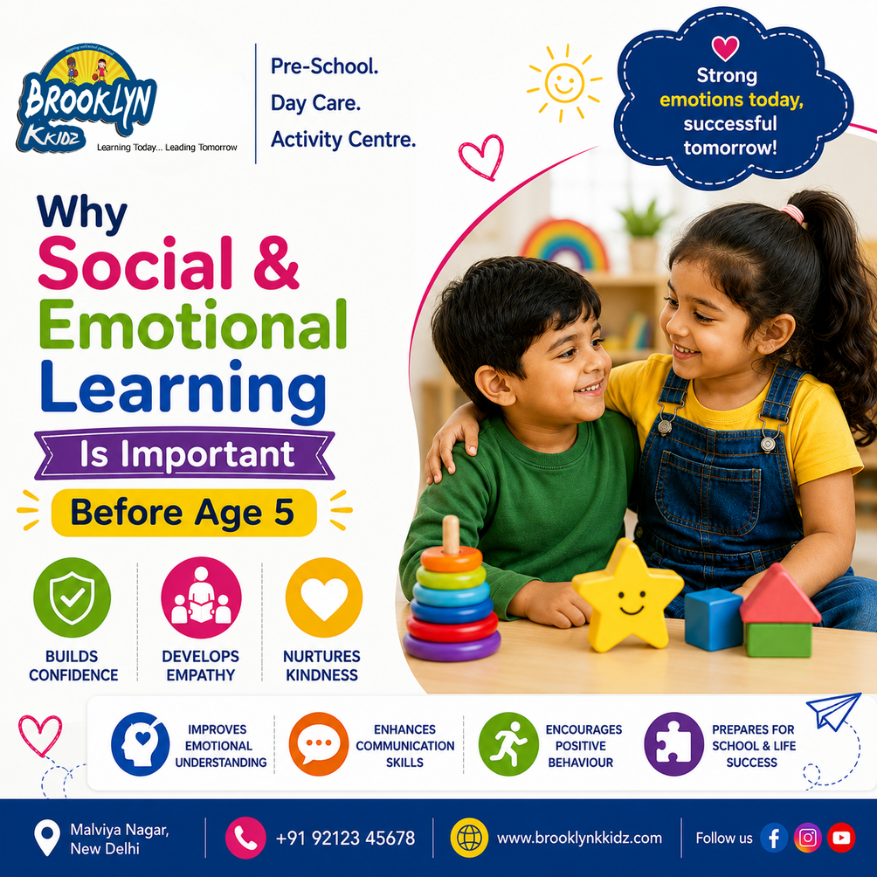
Why Social & Emotional Learning Is Important Before Age 5
The first five years of a child’s life are among the most important for brain development and personality formation. During this stage, children are not only learning numbers, letters, and colors but also developing the ability to understand emotions, build friendships, communicate effectively, and solve everyday problems. These life skills are known as Social and Emotional Learning (SEL), and they play a crucial role in shaping a child’s confidence, behavior, and future success. While academic learning provides knowledge, social and emotional learning helps children understand themselves and the people around them, creating a strong foundation for lifelong learning and healthy relationships.
What Is Social and Emotional Learning?
Social and Emotional Learning is the process through which children learn to recognize and manage their emotions, understand the feelings of others, build positive relationships, make responsible decisions, and develop self-confidence. These skills are introduced naturally through conversations, storytelling, group activities, imaginative play, and everyday interactions. Rather than being taught as a separate subject, SEL becomes a part of every learning experience, helping children grow emotionally while exploring the world around them.
Why the First Five Years Matter
A child’s brain develops rapidly during the early years, making this the ideal time to nurture emotional intelligence and social awareness. Experiences during this period shape how children respond to challenges, express emotions, and interact with others throughout their lives. Positive experiences, caring relationships, and supportive learning environments encourage children to develop resilience, empathy, and confidence. When these skills are nurtured early, children are more prepared to handle new situations and adapt to different environments as they grow.
Building Confidence Through Positive Experiences
Confidence is one of the greatest gifts parents and educators can give a young child. Social and Emotional Learning encourages children to try new activities, express their ideas, and overcome small challenges without fear of failure. Every time a child successfully completes a task, shares with a friend, or solves a simple problem, their confidence grows. This belief in their own abilities motivates them to become independent learners who are excited to explore new opportunities.
Teaching Children to Understand and Express Emotions
Young children experience a wide range of emotions every day, but they often struggle to understand or express what they are feeling. Social and Emotional Learning helps children identify emotions such as happiness, sadness, anger, excitement, and frustration in healthy ways. Instead of reacting through crying or aggressive behavior, children gradually learn to communicate their feelings using words, ask for help when needed, and develop emotional self-control. These abilities contribute to healthier relationships both at home and in school.
Developing Empathy and Strong Friendships
Empathy is the ability to understand and care about how others feel. It is one of the most valuable social skills children can develop during their preschool years. Through cooperative games, group discussions, role-playing, and storytelling, children learn to listen, share, take turns, and respect different perspectives. These experiences help them build meaningful friendships and create a positive classroom environment where everyone feels valued and included.
Improving Communication Skills
Strong communication skills begin long before children learn to read and write. Everyday conversations, storytelling sessions, singing, and collaborative activities encourage children to express their thoughts clearly while listening carefully to others. As children become better communicators, they also become better problem-solvers and more confident in social situations. These communication skills support both academic achievement and personal growth throughout life.
Preparing Children for School Success
School readiness involves much more than recognizing letters and numbers. Children who have developed social and emotional skills are often better prepared to follow instructions, cooperate with classmates, manage classroom routines, and adapt to new learning environments. They are generally more focused, curious, and willing to participate in classroom activities. Emotional stability and positive social behavior also help children build stronger relationships with teachers, creating an environment where learning becomes enjoyable and meaningful.
The Role of Parents in Social and Emotional Development
Parents are a child’s first teachers, and everyday interactions provide valuable opportunities to strengthen social and emotional skills. Listening patiently, encouraging conversations, reading together, praising positive behavior, and allowing children to solve simple problems independently all contribute to emotional growth. Creating a safe and supportive home environment where children feel heard and respected helps them develop confidence and resilience that will benefit them throughout life.
How Preschool Supports Social and Emotional Learning
A quality preschool provides children with daily opportunities to develop social and emotional skills through structured and unstructured play. Activities such as group games, creative art, music, storytelling, pretend play, and collaborative projects encourage teamwork, communication, and emotional expression. Experienced educators guide children through conflicts, celebrate achievements, and help them build healthy relationships with peers. These daily experiences prepare children for future academic success while nurturing kindness, responsibility, and self-confidence.
Why Brooklyn Kkidz Focuses on Holistic Development
At Brooklyn Kkidz, we believe that every child deserves an environment where they feel safe, respected, and inspired to learn. Our approach combines academic readiness with social and emotional development through interactive learning experiences, creative activities, and meaningful relationships. We encourage children to express themselves confidently, develop empathy for others, solve problems independently, and build lifelong learning habits that extend beyond the classroom. By focusing on the whole child rather than academics alone, we help children grow into confident, compassionate, and capable individuals.
Conclusion
Social and Emotional Learning is one of the most valuable investments in a child’s future. Before the age of five, children develop the emotional intelligence, confidence, empathy, communication skills, and resilience that will influence every stage of their lives. While academic knowledge opens the door to education, strong social and emotional skills help children thrive in school, build lasting relationships, and face life’s challenges with confidence. By nurturing these essential skills from an early age, parents and educators work together to create happy, emotionally secure, and successful learners.
Frequently Asked Questions (FAQs):
What is Social and Emotional Learning (SEL)?
Social and Emotional Learning is the process of helping children understand emotions, build healthy relationships, communicate effectively, develop empathy, and make responsible decisions.
Why is Social and Emotional Learning important before age five?
The first five years are critical for brain development. During this period, children learn emotional regulation, communication, empathy, and confidence that shape their future learning and relationships.
How can parents encourage Social and Emotional Learning at home?
Parents can support SEL by talking about emotions, reading stories together, encouraging sharing, praising positive behavior, playing interactive games, and providing a loving and supportive environment.
How does preschool help children develop social skills?
Preschools create opportunities for teamwork, group play, storytelling, creative activities, and guided interactions that help children communicate, cooperate, and build friendships.
Why is Social and Emotional Learning important for school readiness?
Children with strong social and emotional skills adapt more easily to classroom routines, communicate effectively, manage emotions, cooperate with others, and develop a positive attitude toward learning.