
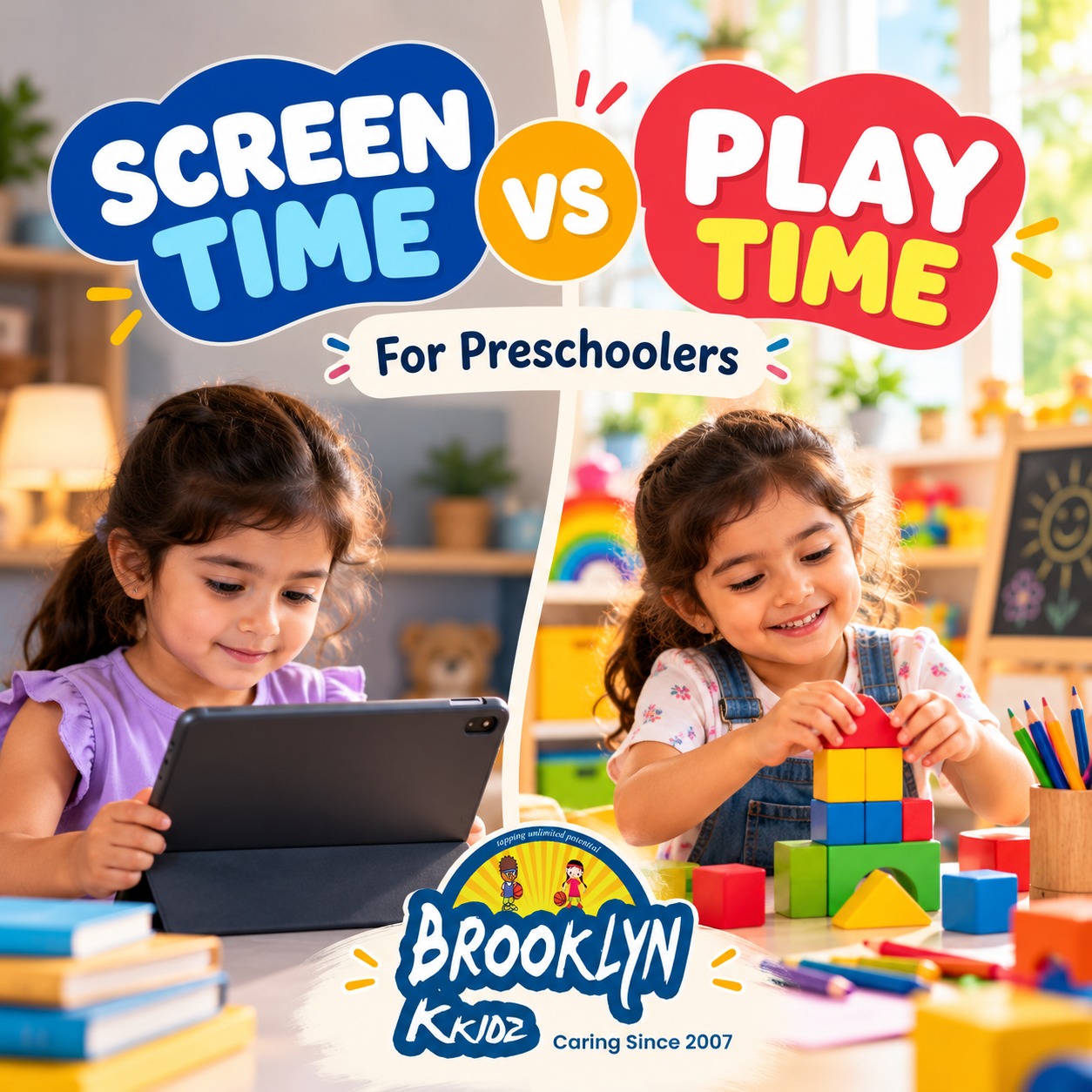
Screen Time vs Play Time: How to Create a Healthy Daily Routine for Preschoolers
Screens are now a normal part of everyday family life. From cartoons and educational videos to smartphones and tablets, digital devices can be useful for entertainment and learning. At the same time, preschoolers need plenty of opportunities to move, play, talk, explore, create, and interact with the people around them. The challenge for parents is not necessarily choosing between technology and play, but finding a healthy daily balance that gives children enough time for both learning and real-world experiences.
A well-planned routine can make this balance easier. When children have predictable times for meals, preschool, active play, creative activities, screen use, family interaction, and sleep, they know what to expect throughout the day. This can also make transitions away from screens easier and create more opportunities for healthy development.
Why Play Time Is So Important for Preschoolers
Play is one of the primary ways young children learn about themselves and the world around them. Running, climbing, building, drawing, pretending, singing, and playing with other children allow preschoolers to develop physical, cognitive, language, social, and emotional skills.
The World Health Organization recommends that children aged 3–4 years get at least 180 minutes of physical activity spread throughout the day, including at least 60 minutes of moderate-to-vigorous activity. It also recommends no more than one hour of sedentary screen time for this age group, with less being better. World Health Organization
This does not mean that every minute of a child’s day needs to be structured. Free play, where children decide what they want to do, is also valuable because it gives them opportunities to use their imagination, make choices, and solve problems independently.
Is All Screen Time Bad for Preschoolers?
No. Screen time itself is not automatically harmful. The more important question is what children are watching or doing, how long they spend doing it, and what the screen time replaces.
A short period of age-appropriate educational content can be very different from several hours of passive viewing. The American Academy of Pediatrics also encourages families to think about healthy technology habits in the context of sleep, physical activity, family interaction, and other important parts of a child’s daily life. HealthyChildren.org
The goal should therefore be to make screen use purposeful while protecting time for activities that young children need for healthy development.
Create a Predictable Morning Routine
Mornings can set the tone for the entire day. Instead of beginning the morning with a television or smartphone, try starting with waking up, getting dressed, brushing teeth, having breakfast, and preparing for preschool or another activity.
A screen-free morning gives children an opportunity to become active and engaged before digital entertainment enters the day. It can also make leaving for preschool easier because the child is already following a predictable sequence.
Make Active Play a Daily Priority
Preschoolers need opportunities to move throughout the day. Outdoor games, running, dancing, cycling, climbing, ball games, and simple family walks can turn physical activity into something children look forward to.
You don’t need expensive equipment or a complicated exercise routine. A park visit, a treasure hunt, dancing to music, or playing “follow the leader” at home can provide movement while making family time enjoyable.
The AAP similarly encourages families to make physical activity part of everyday life through outdoor play, walking, dancing, games, and other activities children enjoy. HealthyChildren.org
Give Children Plenty of Creative Play
Not every activity needs to be physically active. Creative and imaginative play are equally important parts of a preschooler’s day.
Drawing, painting, building blocks, puzzles, clay, storytelling, pretend play, music, and simple crafts encourage children to create and experiment. Unlike many digital activities that provide predetermined outcomes, open-ended play allows children to decide what they want to make and how they want to play.
Keep Screen Time Predictable
Children are often more resistant to turning off a screen when they don’t know when their screen time will end. Instead of allowing devices whenever a child asks, create predictable periods when screens are available.
For example, a family might decide that screen time happens after lunch or after certain activities are completed. The exact routine will depend on the child’s age and the family’s schedule, but consistency can help children understand expectations.
Giving a warning before screen time ends can also make transitions smoother. Saying, “Five more minutes, then we are going to put the tablet away and read a book,” gives the child time to prepare for the change.
Keep Meals and Bedrooms Screen-Free
Meals provide valuable opportunities for family conversation, while bedtime should be associated with relaxation and sleep rather than stimulating digital content.
The AAP recommends creating screen-free family periods and keeping screens out of children’s bedrooms, particularly around bedtime. HealthyChildren.org
Instead of a device before bed, parents can create a simple routine involving bathing, brushing teeth, reading a story, talking about the day, and going to sleep.
Build a Simple Daily Rhythm
A preschooler’s routine does not have to follow the same exact timetable every day. What matters is creating a balanced rhythm that includes the major elements children need.
A typical day might begin with breakfast and getting ready, followed by preschool or learning time. Afterward, children can have lunch, rest, enjoy outdoor or active play, spend time on creative activities, have a limited period of screen use if the family chooses, and finish the day with dinner, family interaction, reading, and bedtime.
The specific timing can change according to your child’s age, school schedule, nap needs, and family routine.
Replace Screen Time With Interesting Alternatives
Reducing screen time becomes much easier when children have something enjoyable to do instead. If the only alternative is “nothing,” a screen can quickly become the most attractive option.
Keep a small collection of simple activities available, such as colouring materials, puzzles, building blocks, books, play dough, musical instruments, or pretend-play props. Outdoor activities such as gardening, cycling, collecting leaves, or playing with a ball can also provide exciting alternatives.
WHO specifically highlights reading, storytelling, singing, and puzzles with caregivers as valuable non-screen sedentary activities for young children. World Health Organization
Parents Should Model Healthy Screen Habits
Children observe what adults do. If parents frequently use phones during meals, conversations, or family activities, children may naturally want to do the same.
Creating healthy habits for the entire family can make screen limits feel less like a punishment directed at children. Putting phones away during meals, spending part of the evening without devices, and choosing family activities can show children that life beyond screens can be enjoyable.
The AAP also recommends modelling healthy digital behaviour because children often learn technology habits by watching adults. HealthyChildren.org
Don’t Make the Routine Too Strict
A healthy routine should provide structure without making family life stressful. There will be days when a child watches more television because they are tired, sick, travelling, or simply because the family needs a break.
One unusual day does not determine a child’s overall habits. Focus on what happens most of the time and make gradual changes when the routine becomes unbalanced.
The goal is not to create a perfect schedule. It is to create a lifestyle where children regularly have opportunities to sleep well, move, play, learn, interact, and enjoy technology in an appropriate way.
How Brooklyn Kkidz Encourages Learning Through Play
At Brooklyn Kkidz, we believe preschool learning should be active, engaging, and connected to real experiences. Children need opportunities to explore, create, communicate, move, collaborate, and develop independence.
Through play-based activities, creative experiences, storytelling, group interaction, and hands-on learning, children can develop important skills while enjoying their childhood. A balanced routine at home and meaningful learning experiences at preschool can work together to support healthy development.
Conclusion
The question is not simply whether screen time or play time is better. Preschoolers need a balanced day that includes active play, creative exploration, social interaction, learning, family time, healthy meals, adequate sleep, and thoughtfully managed screen use.
Start with small changes. Create predictable screen periods, protect family meals and bedtime from devices, encourage outdoor play, offer creative alternatives, and model healthy technology habits yourself. With consistency and flexibility, parents can create a daily routine that gives children plenty of opportunities to play, explore, learn, and grow.
Frequently Asked Questions (FAQs):
How much screen time should a preschooler have?
For children aged 3–4, WHO recommends no more than one hour of sedentary screen time per day, with less being better. Families should also consider what the child is watching and whether screen use is replacing sleep, physical activity, play, or interaction.
How much play time does a preschooler need?
Children aged 3–4 should have at least 180 minutes of physical activity spread throughout the day according to WHO guidance, including at least 60 minutes of moderate-to-vigorous activity.
What can I do instead of giving my child a screen?
Reading, drawing, puzzles, blocks, pretend play, music, dancing, gardening, outdoor games, storytelling, and simple household activities can all provide engaging alternatives.
Should screens be allowed before bedtime?
It is generally helpful to establish a screen-free period before bedtime. The AAP recommends turning off screens at least an hour before bed and keeping devices out of children’s bedrooms.
How can I stop screen-time tantrums?
Create predictable limits, give advance warnings before screen time ends, stay consistent, and have an engaging alternative ready. Calm and consistent transitions can help reduce repeated conflicts around devices.