
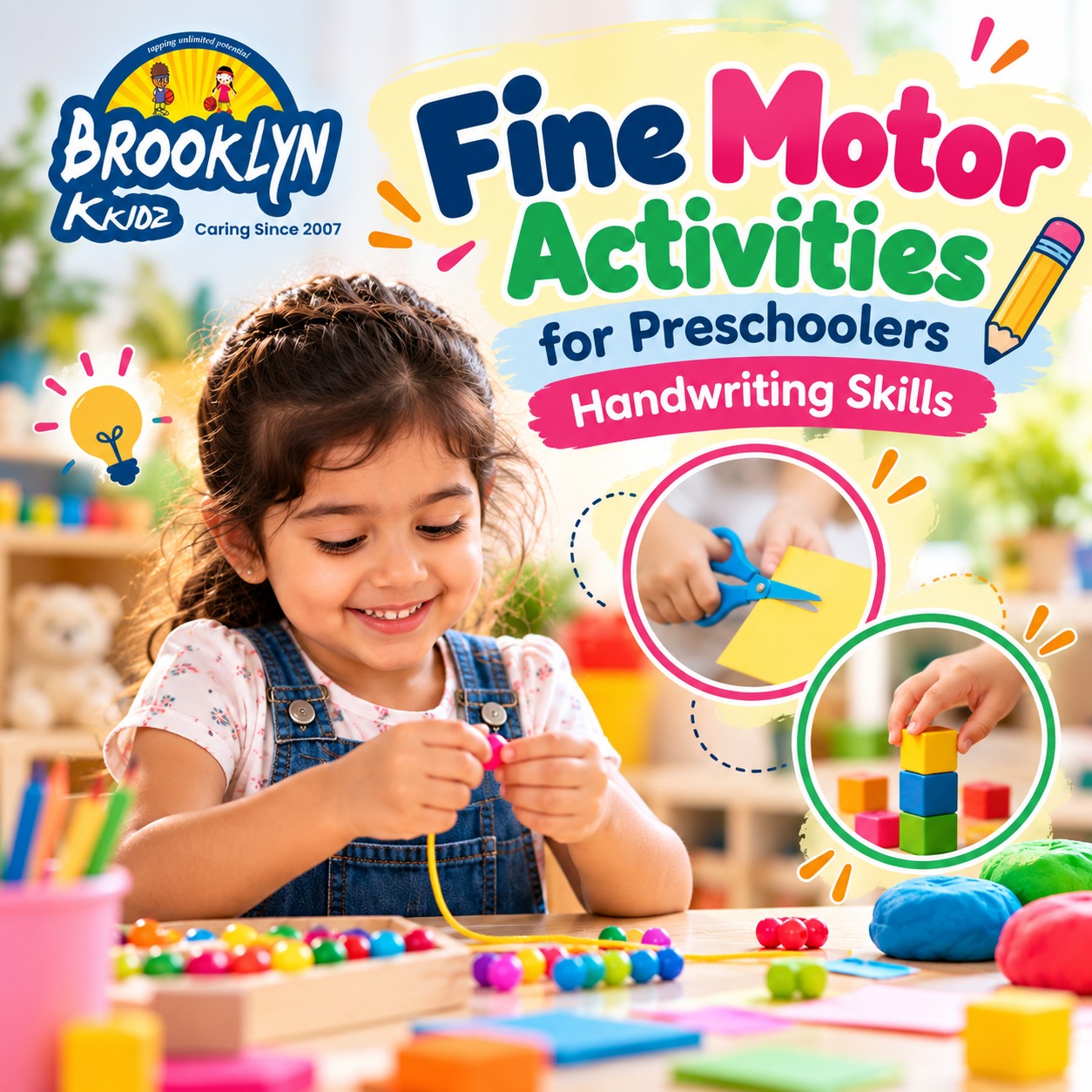
10 Fun Fine Motor Activities for Preschoolers to Build Handwriting Skills
Learning to write does not begin when a child first picks up a pencil. Long before preschoolers start forming letters and numbers, they need to develop the small muscles in their hands and fingers that help them hold, control, and move a writing tool. These abilities are known as fine motor skills, and they play an important role in early writing development.
For young children, practising handwriting does not have to mean sitting at a desk and repeatedly tracing letters. Fun activities such as drawing, threading, building, squeezing, cutting, and playing with clay can strengthen the hands while keeping children engaged. When learning feels like play, children are more likely to practise naturally and develop confidence.
Why Fine Motor Skills Are Important for Handwriting
Writing requires children to coordinate several movements at the same time. They need to hold a pencil comfortably, control the pressure they apply, move their fingers accurately, and coordinate what their eyes see with how their hands move.
Strong fine motor skills help children develop better control over these movements. They can also support everyday tasks such as buttoning clothes, using utensils, opening containers, turning pages, and handling classroom materials.
Developing these skills gradually during the preschool years can help children approach early writing activities with greater comfort and confidence.
1. Play Dough and Clay Activities
Play dough is one of the simplest ways to strengthen little hands. Encourage your child to squeeze, roll, pinch, flatten, twist, and shape the dough using their fingers and palms.
You can turn the activity into a learning game by asking your child to make balls, snakes, flowers, letters, or simple shapes. The repeated squeezing and pinching movements exercise the small muscles needed for controlled pencil movements later.
2. Threading Beads and Pasta
Threading activities are excellent for developing hand-eye coordination and finger control. Give your child large beads, pasta pieces with suitable holes, or other age-appropriate threading materials and let them create necklaces, patterns, or simple shapes.
As children pick up each piece and guide it onto a string, they practise precision and coordination. These skills can later support the controlled movements required for drawing and writing.
3. Drawing With Crayons
Drawing is an important early step toward handwriting. Give children crayons, coloured pencils, or washable markers and encourage them to draw freely.
Instead of asking them to create something specific every time, allow them to make lines, circles, zigzags, faces, houses, animals, and imaginary pictures. Different drawing movements help children practise controlling their hands and developing confidence with writing tools.
4. Using Child-Safe Scissors
Cutting with child-safe scissors can strengthen the fingers while improving hand coordination. Start with simple activities such as cutting straight lines on paper and gradually introduce curves, zigzags, and simple shapes as your child becomes more comfortable.
Always supervise young children when using scissors and choose tools designed for their age. The goal is not perfect cutting but practising controlled hand movements.
5. Sticker and Peeling Activities
Stickers are a simple and enjoyable way to strengthen finger muscles. Ask your child to peel stickers from a sheet and place them on paper to create pictures, patterns, or simple scenes.
The small pinching movement required to peel a sticker helps children practise finger strength and precision. You can also use stickers to create counting, colour, or shape games.
6. Using Tongs or Tweezers
Moving small objects with child-safe tongs or tweezers can provide excellent finger-strengthening practice. Children can transfer pom-poms, large beads, toy objects, or other suitable materials from one container to another.
You can turn this into a sorting game by asking your child to separate objects according to colour, size, or shape. This combines fine motor development with early thinking and classification skills.
7. Finger Painting and Drawing in Different Materials
Finger painting allows children to use their fingers and hands while exploring colours and textures. It also provides opportunities to practise making lines, dots, circles, waves, and other patterns.
For variety, children can draw shapes in sand, flour, or another safe sensory material under adult supervision. These activities allow children to practise pre-writing movements without the pressure of holding a pencil.
8. Building With Blocks
Building blocks may not look like handwriting practice, but they provide valuable opportunities for fine motor development. Picking up, positioning, stacking, and connecting small blocks requires finger control and hand-eye coordination.
Encourage your child to build towers, houses, bridges, or anything they can imagine. Open-ended construction also supports creativity, planning, concentration, and problem-solving.
9. Buttoning, Zipping, and Everyday Tasks
Everyday self-help activities can become excellent fine motor practice. Encourage children to practise opening and closing zippers, fastening large buttons, using child-friendly utensils, turning pages, and opening suitable containers.
These tasks strengthen the hands while developing independence. Children also learn that their hands can be used to solve practical problems, which builds confidence before they begin more formal writing activities.
10. Pre-Writing Lines and Patterns
Once children have developed some hand strength and control, introduce simple pre-writing patterns. Encourage them to practise vertical lines, horizontal lines, circles, curves, waves, and zigzag patterns.
These movements form the foundation of many shapes used in letters and numbers. Keep practice short and enjoyable rather than expecting children to complete long worksheets.
Don’t Rush the Pencil
Parents sometimes worry when a preschooler does not hold a pencil exactly like an older child. Pencil grip develops gradually, and children need opportunities to build hand strength and coordination before being expected to write for extended periods.
Instead of constantly correcting the way a child holds a pencil, focus on providing varied opportunities to strengthen their hands and practise controlled movements. A comfortable and functional grip can develop as their skills mature.
Make Fine Motor Practice Part of Everyday Play
Fine motor development does not need to happen during a formal “practice session.” Cooking, gardening, drawing, building, dressing, craft activities, puzzles, and playing with age-appropriate toys can all strengthen the hands.
The more variety children experience, the more opportunities they have to develop different aspects of coordination and control. Keeping activities playful also helps children develop positive feelings toward learning.
How Brooklyn Kkidz Supports Early Writing Development
At Brooklyn Kkidz, we understand that handwriting readiness begins well before children start writing complete letters and words. Our play-based learning environment gives children opportunities to develop fine motor skills through creative activities, art, puzzles, building, sensory experiences, and hands-on exploration.
By strengthening hand control while encouraging creativity and curiosity, we help children build the foundations they need for future writing and classroom learning. Our approach focuses on making learning enjoyable while allowing children to develop skills at their own pace.
Conclusion
Strong handwriting skills are built gradually through many small experiences. Preschoolers do not need endless worksheets to prepare for writing. They need opportunities to squeeze, pinch, draw, cut, build, thread, sort, and explore using their hands.
Simple activities such as play dough, threading, drawing, stickers, blocks, and pre-writing patterns can strengthen fine motor skills while making learning enjoyable. With patience, encouragement, and plenty of playful practice, children can develop the hand control, coordination, and confidence that form the foundation for successful early handwriting.
Frequently Asked Questions (FAQs):
What are fine motor skills?
Fine motor skills involve the small movements of the hands, fingers, and wrists that allow children to perform tasks such as drawing, writing, cutting, buttoning clothes, and using small objects.
When should children start handwriting activities?
Children can begin developing pre-writing skills during the preschool years through drawing, colouring, play dough, tracing simple patterns, and other activities that strengthen hand control.
How can I improve my child's pencil grip?
Provide plenty of activities that strengthen the fingers and hands, such as play dough, threading, drawing, puzzles, and tong activities. Pencil grip develops gradually, so avoid putting unnecessary pressure on young children.
Are play activities really helpful for handwriting?
Yes. Many playful activities develop the hand strength, coordination, precision, and visual-motor skills that children eventually use for writing.
How long should preschoolers practise handwriting?
Keep formal writing practice short and age-appropriate. Young children generally benefit more from varied, enjoyable activities than from long handwriting sessions.