
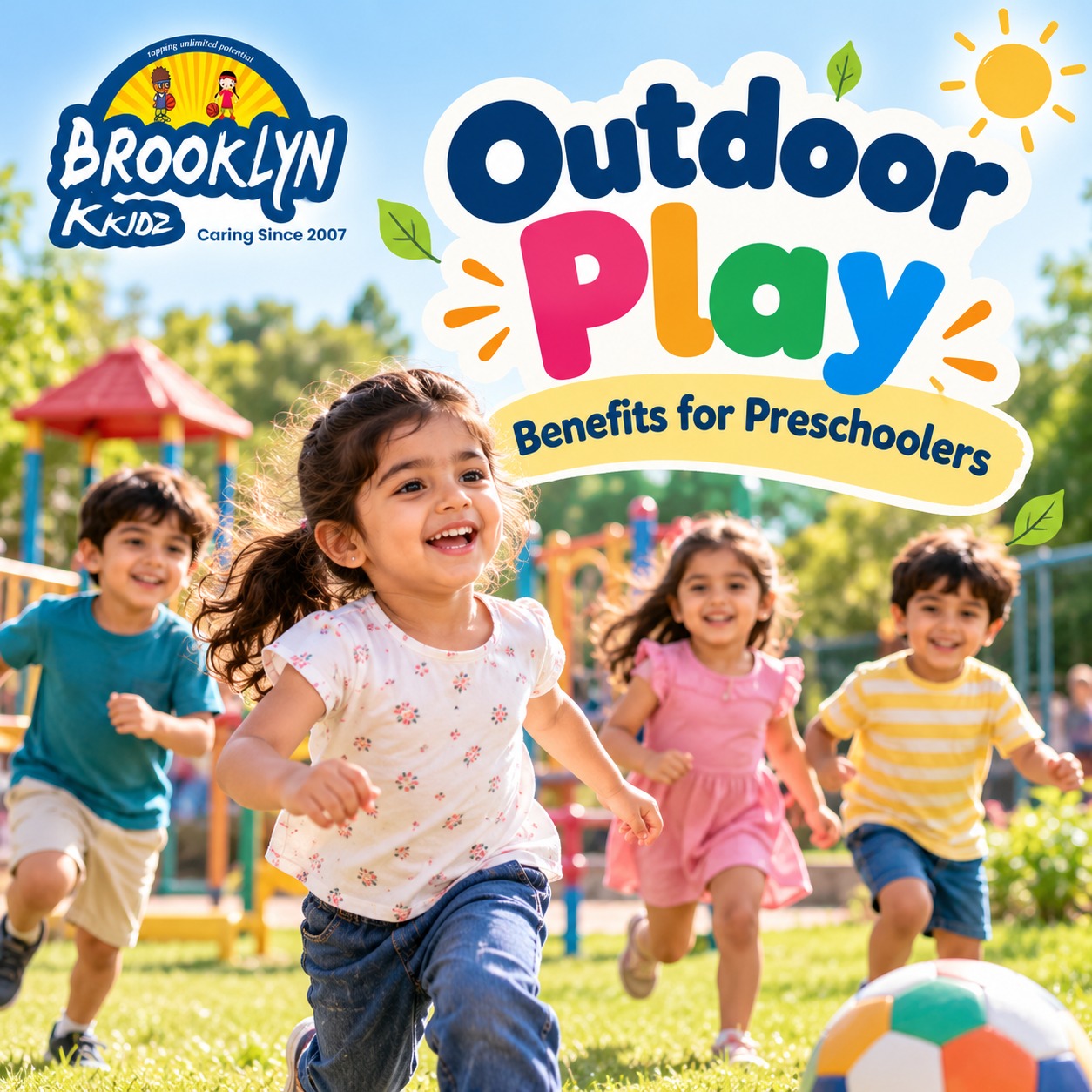
How Outdoor Play Helps Preschoolers Develop Confidence, Creativity and Social Skills
For young children, the world outside the classroom is a natural place for learning. A simple visit to a park, playground, garden, or open space can give preschoolers opportunities to run, climb, explore, imagine, communicate, and solve problems. Unlike structured classroom activities, outdoor play often gives children more freedom to make choices and discover things at their own pace.
Outdoor play is therefore much more than physical exercise. It can support a child’s confidence, creativity, communication, independence, and social development while encouraging curiosity about the world around them. When children are given regular opportunities to play outdoors, everyday experiences can become valuable learning moments.
Why Outdoor Play Is Important During the Preschool Years
The preschool years are a period of rapid physical, cognitive, social, and emotional development. Children are learning how to use their bodies, communicate with others, manage emotions, and understand their surroundings.
Outdoor environments provide a different kind of learning experience from indoor classrooms. Children have more space to move, experiment, observe nature, and interact with other children. These experiences can complement classroom learning while supporting healthy development.
The World Health Organization recommends that children aged 3–4 years spend at least 180 minutes being physically active throughout the day, including at least 60 minutes of moderate-to-vigorous physical activity.
Outdoor Play Builds Confidence
Confidence grows when children discover that they can do things independently. Outdoor play provides countless opportunities for these small achievements.
A child who climbs a new step on a playground, learns to balance on a beam, kicks a ball toward a target, or successfully rides a bicycle experiences a sense of accomplishment. These moments teach children that trying, practising, and making mistakes can eventually lead to success.
Parents and educators can strengthen this confidence by encouraging effort rather than demanding perfection. Saying, “You kept trying,” can help children understand that progress is more important than getting everything right immediately.
Allowing Children to Take Age-Appropriate Challenges
Outdoor environments naturally present manageable challenges. Children may need to figure out how to climb over an obstacle, cross a small balance structure, or build something using natural materials.
With appropriate supervision, allowing children to attempt age-appropriate challenges gives them opportunities to make decisions and assess what they can do. Adults can provide support without taking over every task.
These experiences gradually encourage independence and self-belief.
Outdoor Play Encourages Creativity
Creativity is not limited to drawing or painting. Children can be creative through movement, storytelling, construction, pretend play, and exploration.
A garden can become a jungle. A few sticks can become a bridge. A playground can become a spaceship. A collection of leaves can become part of an imaginary meal.
Outdoor spaces often provide open-ended materials and situations that allow children to decide how they want to play. This freedom encourages imagination and flexible thinking.
Nature Can Become a Classroom
Children do not need complicated science lessons to begin exploring the natural world. Watching ants, collecting leaves, observing clouds, planting seeds, feeling different textures, or listening to birds can encourage curiosity.
Parents can ask simple questions such as, “What do you notice?” or “Why do you think this leaf is different?” These conversations encourage children to observe, compare, predict, and explain their ideas.
Outdoor Play Supports Problem-Solving
Outdoor play often presents children with small problems that need solutions. A ball may roll somewhere difficult to reach, a tower of stones may fall, or children may need to decide how to share space during a game.
Instead of immediately solving the problem, adults can encourage children to think about possible solutions. Questions such as “What could we try?” or “Is there another way?” help children practise independent thinking.
These simple experiences can strengthen problem-solving skills that are useful far beyond the playground.
Outdoor Play Develops Social Skills
Play becomes even more valuable when children play together. Outdoor games encourage preschoolers to communicate, cooperate, take turns, negotiate, and understand other people’s perspectives.
A simple game involving a ball can teach children to wait for their turn. Building something together can require them to share materials. Pretend play can encourage children to listen to each other’s ideas and create a story together.
These experiences help children understand that playing with others sometimes requires flexibility and cooperation.
Learning to Handle Disagreements
Children will not always agree while playing, and that is normal. One child may want a particular toy while another wants the same one. Two children may have different ideas about how a game should work.
With calm adult guidance, these moments can become opportunities to practise communication and emotional regulation. Children can learn to express what they want, listen to others, and look for solutions.
The goal is not to prevent every disagreement but to help children gradually learn how to manage everyday social situations.
Outdoor Play Can Improve Communication
Outdoor environments give children many things to talk about. They can describe what they see, ask questions, tell stories, and share discoveries with parents, teachers, and friends.
Talking about nature, games, movements, and observations introduces new vocabulary in a meaningful context. Instead of memorising words, children experience them.
For example, observing a butterfly can lead to conversations about colours, movement, wings, flowers, and insects. One small outdoor experience can become a rich language-learning opportunity.
Physical Activity and Emotional Well-Being
Active outdoor play gives children opportunities to move their bodies while enjoying themselves. Running, jumping, climbing, balancing, throwing, and dancing can support physical development and coordination.
Outdoor time can also provide a change from sedentary activities and screen-based entertainment. The WHO recommends limiting sedentary screen time for preschool-aged children and replacing it with active play and quality interaction when possible.
A balanced daily routine can therefore include a healthy combination of learning, active play, creative activities, family interaction, rest, and appropriate screen use.
How Parents Can Encourage More Outdoor Play
Outdoor play does not have to involve an expensive playground or organised activity. A family walk, a visit to a nearby park, gardening, collecting leaves, playing with a ball, or simply exploring the surroundings can provide valuable experiences.
Parents can also follow their child’s interests. If a child loves animals, explore nature together. If they enjoy building, collect safe natural materials for construction play. If they love movement, create simple outdoor games.
The objective is to make outdoor activity enjoyable rather than turning it into another task on a daily checklist.
How Brooklyn Kkidz Encourages Learning Through Play
At Brooklyn Kkidz, we believe that children learn through active experiences, curiosity, interaction, and play. Outdoor activities provide valuable opportunities for children to move, explore, communicate, collaborate, and develop confidence.
Our approach to early childhood education focuses on nurturing the whole child. Alongside early academic learning, children are encouraged to develop social skills, creativity, independence, communication, and problem-solving through meaningful activities.
By giving children opportunities to learn through both indoor and outdoor experiences, we help create a balanced environment where children can explore their interests and develop at their own pace.
Conclusion
Outdoor play gives preschoolers something that worksheets and screens cannot fully provide: the freedom to move, explore, imagine, interact, and discover.
Whether a child is climbing at a playground, playing a game with friends, collecting leaves, building with sticks, or simply running around an open space, these experiences can support important areas of development.
Regular outdoor play can help children become more confident in their abilities, more creative in their thinking, and more comfortable interacting with others. For preschoolers, sometimes the best classroom is simply the world around them.
Frequently Asked Questions
How much outdoor play should preschoolers have?
Children aged 3–4 should get substantial physical activity throughout the day. WHO recommends at least 180 minutes of total physical activity spread across the day, including at least 60 minutes of moderate-to-vigorous activity.
What are the benefits of outdoor play for preschoolers?
Outdoor play can support physical development, coordination, confidence, creativity, communication, social interaction, problem-solving, and curiosity.
Does outdoor play help children become more confident?
Yes. Age-appropriate outdoor challenges allow children to practise skills, make decisions, overcome small difficulties, and experience successful accomplishments, all of which can contribute to confidence.
What outdoor activities are suitable for preschoolers?
Running games, ball games, cycling, nature walks, gardening, sand play, climbing, balancing, collecting leaves, and imaginative outdoor play can all be suitable depending on the child’s age and environment.
Can outdoor play reduce screen time?
Outdoor activities can provide an engaging alternative to sedentary screen-based entertainment. Combining outdoor play with creative indoor activities and family interaction can help create a healthier daily routine.
Why is outdoor play important for social development?
Playing with other children gives preschoolers opportunities to communicate, share, take turns, cooperate, negotiate, and learn how to handle disagreements.