
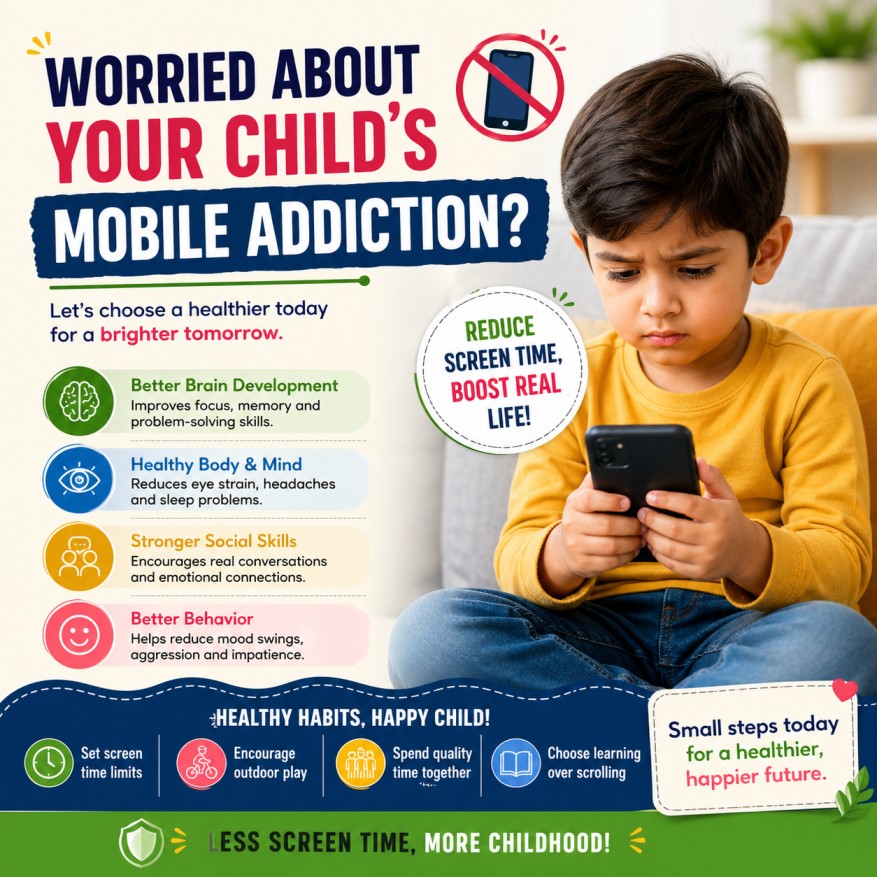
In today’s digital world, mobile phones have become a part of everyday life—even for young children. From cartoons to games, screens are everywhere.
But here’s the concern:
When screen time turns into dependency, it can affect a child’s brain development, behavior, and overall growth.
This guide will help you understand child mobile addiction, its signs, effects, and practical ways to manage it—without stress or guilt.
What is Child Mobile Addiction?
Child mobile addiction happens when a child becomes overly dependent on smartphones or tablets and struggles to stay away from screens.
It often starts small—watching videos or playing games—but gradually turns into a habit that’s hard to control.
⚠️ Signs of Mobile Addiction in Children:
Watch out for these common signs:
- 📱 Constant demand for mobile phones
- 😡 Irritability when the phone is taken away
- 💤 Reduced sleep or late-night screen usage
- 📉 Lack of interest in outdoor play or studies
- 🧍 Social withdrawal or less interaction with family
If you notice multiple signs, it’s time to take action early.
Harmful Effects of Mobile Addiction:
🧠 1. Delayed Brain Development
When children spend too much time on screens, it can slow down their brain development. They may find it harder to focus, remember things, and solve simple problems in daily life.
👀 2. Eye Strain & Health Issues
Long hours on mobile screens can put pressure on a child’s eyes and body. This often leads to eye strain, frequent headaches, and even poor posture as they sit in unhealthy positions for extended periods.
💤 3. Sleep Problems
Using mobile phones, especially before bedtime, can disturb a child’s natural sleep cycle. The blue light from screens makes it difficult for them to fall asleep, resulting in poor sleep quality and tiredness during the day.
🗣️ 4. Poor Communication Skills
Children who spend more time on screens often miss out on real-life conversations. Over time, this can affect their ability to express themselves clearly and build strong social connections.
⚡ 5. Behavioral Issues
Excessive screen time can also impact a child’s behavior. They may become more irritable, show signs of aggression, and struggle with patience when things don’t go their way.
Recommended Screen Time for Kids:
Experts suggest that children below 2 years should avoid screen time completely, as their brains are still developing rapidly. For kids aged 2 to 5 years, screen time should be limited to a maximum of one hour per day, and even then, it should be high-quality, educational content. For children above 6 years, screen use should be controlled and monitored carefully, ensuring it doesn’t interfere with studies, sleep, or physical activity.
👉 Ultimately, the quality of content matters more than the quantity of time spent.
How to Reduce Mobile Addiction in Children:
🎯 Set Clear Screen Time Rules
Establishing clear and consistent screen time limits helps children understand boundaries. When rules are followed daily, it becomes easier for them to develop healthy habits.
🎨 Encourage Offline Activities
Introducing fun and creative alternatives like drawing, puzzles, building blocks, or storytelling can naturally reduce their interest in screens and boost their imagination.
👨👩👧 Be a Role Model
Children learn by observing their parents. When you reduce your own screen time and engage in meaningful activities, they are more likely to follow your example.
🌿 Promote Outdoor Play
Spending time outdoors allows children to stay active, interact with others, and explore their surroundings. This not only improves physical health but also enhances creativity and social skills.
🕒 Create a Daily Routine
A structured daily schedule gives children a sense of discipline and reduces unnecessary screen usage by keeping them engaged in productive activities.
📵 No Phone Zones
Designating certain times and places, such as during meals, family gatherings, or before bedtime, as phone-free helps create stronger family bonds and healthier habits.
🤝 Engage with Your Child
Spending quality time talking, playing, and bonding with your child strengthens your relationship and naturally decreases their dependence on mobile devices.
Role of Preschool in Reducing Screen Addiction:
A structured preschool environment plays a crucial role in limiting screen exposure. Through play-based learning, group activities, and real-life experiences, children develop social skills and learn more effectively. This hands-on approach not only keeps them engaged but also supports healthy emotional and cognitive development.
Frequently Asked Questions (FAQs):
1. What are signs of mobile addiction in children?Toggle title
Irritability, poor focus, sleep issues, and excessive screen use.
2. How does screen time affect brain development?
It can reduce memory, focus, and problem-solving skills.
3. What is the ideal screen time for kids?
Under 2: none; 2–5: 1 hour; 6+: limited use.
4. How can parents reduce screen time?
Set rules, encourage play, and limit personal device use.
5. Can preschool reduce mobile addiction?
Yes, it promotes learning, play, and social interaction without screens.