
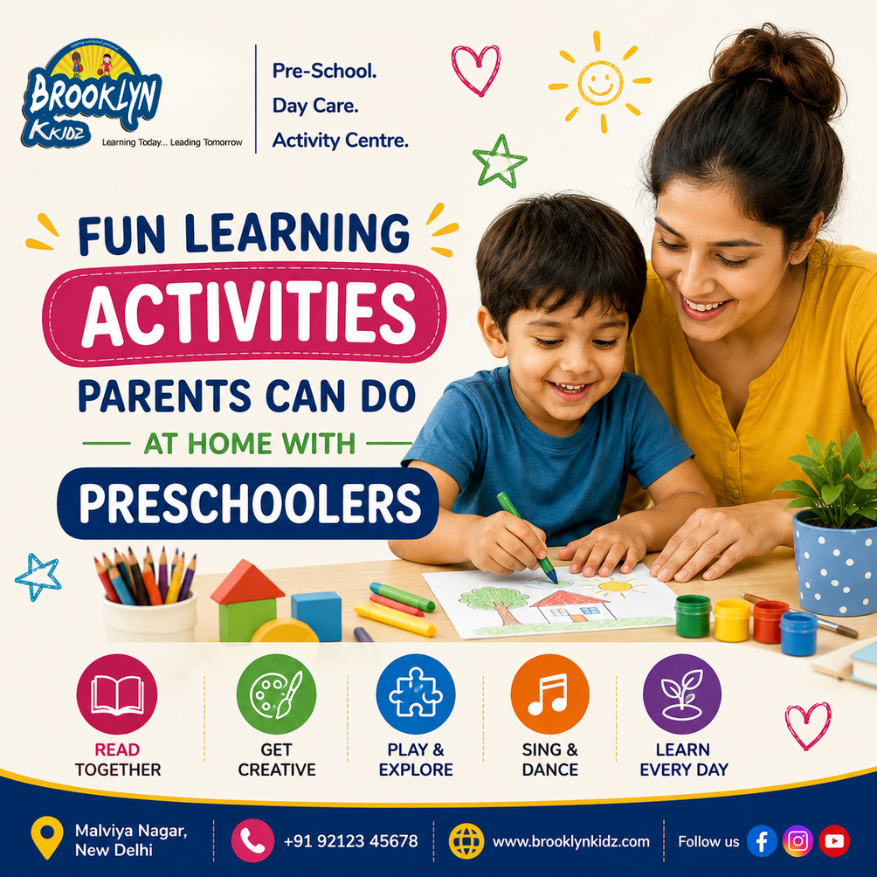
Fun Learning Activities Parents Can Do at Home with Preschoolers
Learning does not begin and end in the classroom. In fact, some of the most valuable learning experiences happen at home through everyday conversations, creative play, and simple family activities. Preschoolers are naturally curious and eager to explore the world around them. Every game they play, every story they hear, and every question they ask contributes to their growth and development. Parents don’t need expensive toys or complicated lesson plans to support their child’s learning. A little creativity, consistency, and quality time can transform ordinary moments into meaningful learning experiences. By making learning enjoyable, parents can strengthen their child’s confidence, curiosity, and love for discovery while creating beautiful memories together.
Why Learning Through Play Is So Important
Young children learn best when they are actively engaged in play. During the preschool years, the brain develops rapidly, making it the perfect time to introduce activities that improve language, creativity, problem-solving, emotional intelligence, and physical coordination. Play-based learning allows children to explore ideas, make decisions, ask questions, and express themselves naturally. Unlike formal teaching methods, learning through play encourages children to enjoy the process of discovering new things without feeling pressured. This approach not only supports academic readiness but also develops social and emotional skills that last a lifetime.
Reading Together Builds Language and Imagination
Reading is one of the simplest yet most powerful activities parents can do at home. Picture books, bedtime stories, and interactive storytelling help children develop vocabulary, listening skills, imagination, and communication abilities. Asking questions during the story, encouraging children to predict what happens next, or inviting them to describe pictures helps improve critical thinking while making reading more engaging. A daily reading habit also creates a lifelong love for books and learning.
Encourage Creativity Through Arts and Crafts
Children express themselves freely through art. Drawing, painting, colouring, paper folding, clay modelling, and simple craft projects improve creativity while strengthening fine motor skills and hand-eye coordination. Rather than focusing on perfect results, parents should encourage children to experiment with colours, shapes, and ideas. Creative activities also help children build patience, confidence, and problem-solving skills as they explore different ways to complete their artwork.
Turn Everyday Moments Into Learning Opportunities
Daily household routines can become valuable learning experiences. Counting fruits while grocery shopping, identifying colours during a walk, sorting laundry by size, watering plants, or helping prepare simple meals all teach important concepts naturally. These activities introduce early mathematics, observation skills, responsibility, and practical life skills while allowing children to feel involved in family life.
Build Problem-Solving Skills with Simple Games
Age-appropriate puzzles, building blocks, matching games, memory cards, and shape-sorting activities encourage logical thinking and problem-solving. These games teach children how to observe patterns, make decisions, and persist when faced with challenges. Every successful solution builds confidence while strengthening concentration and independent thinking.
Music and Dance Make Learning Fun
Music is a wonderful way to improve language development, memory, rhythm, and coordination. Singing nursery rhymes, clapping to different beats, dancing to favourite songs, or playing simple musical instruments helps children develop listening skills and body coordination while expressing emotions freely. Music also creates joyful family moments that children remember for years.
Outdoor Play Supports Healthy Development
Outdoor activities provide opportunities for children to explore nature while developing physical strength and curiosity. Running, jumping, cycling, gardening, collecting leaves, observing birds, or simply playing in the park improve motor skills, balance, coordination, and overall fitness. Spending time outdoors also reduces screen time and encourages children to appreciate the natural world around them.
Pretend Play Encourages Creativity and Confidence
Imaginative play allows children to become doctors, teachers, chefs, shopkeepers, astronauts, or superheroes. Through role play, children practice communication, emotional expression, decision-making, and social interaction. Pretend play helps children understand different situations while developing creativity and confidence in expressing their ideas.
Introduce Simple Science Experiments
Young children love discovering how things work. Safe and simple science activities such as mixing colours, floating and sinking objects in water, planting seeds, observing insects, or creating baking soda experiments encourage curiosity and observation skills. These experiences help children ask questions, make predictions, and develop an interest in exploring the world around them.
Reduce Screen Time with Interactive Family Activities
Many parents struggle to balance technology with active learning. Replacing screen time with interactive family activities encourages stronger relationships while supporting healthy development. Board games, storytelling, cooking together, family walks, treasure hunts, and creative projects provide children with exciting alternatives that stimulate both the mind and body. Quality family time also strengthens emotional bonds and creates positive childhood memories.
Why Brooklyn Kkidz Believes Learning Never Stops
At Brooklyn Kkidz, we believe that learning is most effective when children are happy, curious, and actively engaged. Our play-based curriculum encourages exploration, creativity, communication, and hands-on experiences both inside and outside the classroom. We work closely with parents to extend learning beyond school by encouraging simple activities that nurture every aspect of a child’s development. Together, families and educators create an environment where children grow into confident, compassionate, and enthusiastic learners.
Conclusion
Every home has the potential to become a joyful learning environment. Children do not need expensive educational tools to develop important life skills; they simply need loving guidance, encouragement, and opportunities to explore. Through reading, creative play, music, outdoor adventures, simple household activities, and meaningful family interactions, parents can support their preschooler’s overall development while making learning exciting every day. Small moments spent together today help build confident learners, curious thinkers, and happy children for tomorrow.
Frequently Asked Questions (FAQs):
How can parents make learning fun at home?
Parents can make learning enjoyable by combining play, storytelling, art, music, puzzles, outdoor activities, and everyday household tasks with positive encouragement and family involvement.
What are the best activities for preschoolers at home?
Reading books, drawing, painting, puzzles, building blocks, pretend play, gardening, music, dancing, simple science experiments, and outdoor games are excellent learning activities.
Why is play-based learning important?
Play-based learning supports cognitive, social, emotional, language, and physical development while encouraging creativity, confidence, and problem-solving.
How much time should parents spend on learning activities each day?
Even 30 to 60 minutes of meaningful interaction each day through reading, playing, or creative activities can significantly support a child’s development.
Can learning at home prepare children for preschool?
Yes. Home learning helps children develop communication skills, confidence, curiosity, independence, and early academic concepts that make the transition to preschool smoother and more enjoyable.