
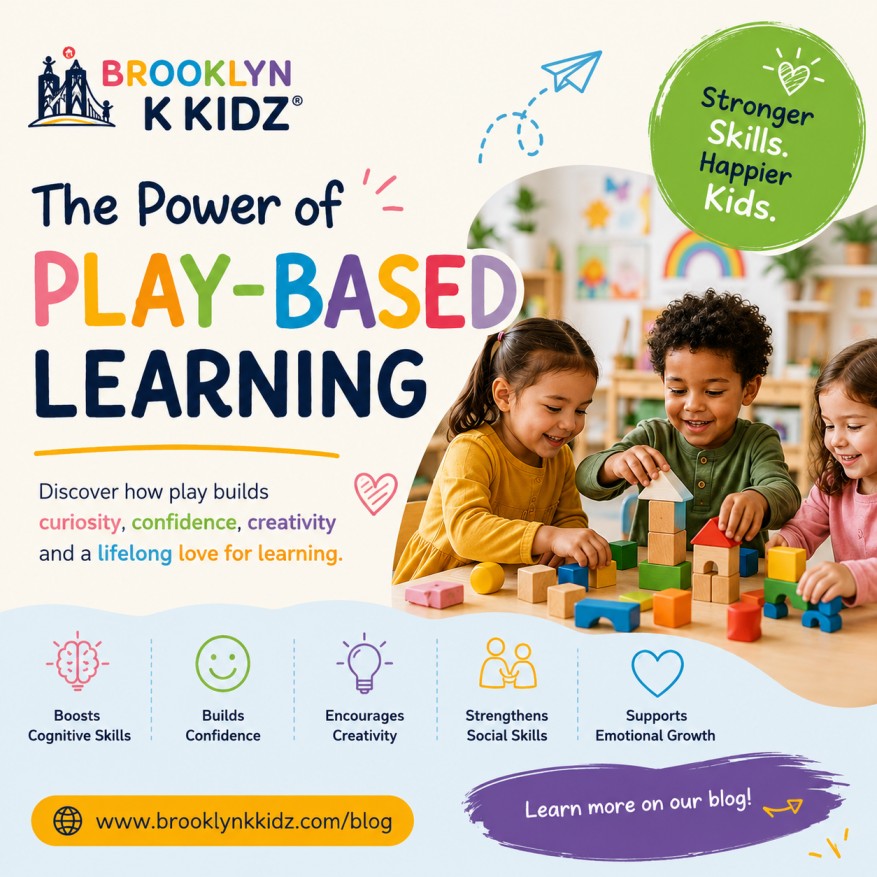
Children learn best when they are happy, active, and curious. That’s why play-based learning has become one of the most effective methods in early childhood education.
Instead of forcing children to memorize lessons, play-based learning encourages them to explore, imagine, create, and interact naturally. Through games, activities, storytelling, music, and hands-on experiences, children develop important life skills while having fun.
In today’s fast-moving world, many parents focus only on academics. However, early childhood experts believe that learning through play builds a much stronger foundation for a child’s future growth and development.
What is Play-Based Learning?
Play-based learning is a teaching approach where children learn through activities and playful experiences instead of traditional classroom pressure.
This method combines:
- Fun activities
- Creativity
- Social interaction
- Exploration
- Real-life learning experiences
Children naturally become more engaged when learning feels enjoyable rather than stressful.
Why Early Childhood Development Matters
The first five years of a child’s life are extremely important because the brain develops rapidly during this stage.
Early learning experiences help shape:
- Communication skills
- Emotional development
- Confidence
- Creativity
- Problem-solving ability
- Social behavior
A positive and engaging environment during these years supports healthy brain development and prepares children for future learning.
🎯 Major Benefits of Play-Based Learning
🧠 1. Improves Brain Development
Activities like puzzles, building blocks, storytelling, and memory games help strengthen brain connections. Children learn how to think, solve problems, and make decisions independently.
Play also improves concentration and memory in young learners.
🗣️ 2. Builds Communication Skills
During group play and classroom interaction, children learn how to:
- Express thoughts
- Listen to others
- Ask questions
- Communicate confidently
These communication skills become valuable throughout life.
🤝 3. Encourages Social Development
Play-based learning teaches children how to:
- Share with others
- Work in groups
- Understand emotions
- Develop friendships
This helps children become socially confident and emotionally balanced.
🎨 4. Boosts Creativity & Imagination
Creative activities like drawing, role play, music, and storytelling encourage children to think beyond limits.
Imagination helps children:
- Explore ideas
- Develop curiosity
- Improve innovation skills
Creativity also supports emotional expression and self-confidence.
💪 5. Enhances Motor Skills
Physical activities such as dancing, running, clay modeling, and block-building help improve both fine and gross motor skills.
These activities strengthen:
- Hand-eye coordination
- Body balance
- Physical control
😊 6. Makes Learning Enjoyable
Children naturally enjoy playing. When learning becomes fun, children participate more actively and develop a positive attitude toward education.
This reduces stress and improves long-term interest in learning.
Examples of Play-Based Learning Activities
Here are some simple activities commonly used in preschools:
🧩 Puzzle Games
Improve logical thinking and focus.
🎭 Pretend Play
Helps children understand real-life situations and improve communication.
🎵 Music & Dance
Supports memory, movement, and emotional development.
📚 Storytelling Sessions
Enhance vocabulary, listening, and imagination.
🎨 Art & Craft Activities
Encourage creativity and fine motor development.
⚽ Outdoor Play
Improves physical health, confidence, and social interaction.
How Parents Can Support Play-Based Learning at Home
Parents play an important role in early childhood development. Simple daily activities at home can create meaningful learning experiences.
You can:
- Read stories together
- Play memory games
- Encourage outdoor play
- Reduce unnecessary screen time
- Allow free creative expression
The goal is to create a safe and joyful learning environment where children feel comfortable exploring new ideas.
Why Play-Based Learning is Better Than Excessive Screen Time
Many children today spend long hours on mobile phones and tablets. While technology can be useful in moderation, excessive screen time may affect:
- Focus
- Sleep
- Social interaction
- Physical activity
Play-based learning provides real-world experiences that support healthy emotional, physical, and mental development.
Children learn more effectively when they actively participate rather than simply watching screens.
Role of Preschool in Play-Based Learning
A quality preschool creates a structured environment where children learn through guided activities, teamwork, and exploration.
Preschools using play-based methods help children:
- Develop confidence
- Build communication skills
- Learn discipline naturally
- Become socially active
These experiences prepare children for school life and future success.
💡 Final Thoughts
Frequently Asked Questions (FAQs):
1. What is play-based learning in preschool?
Play-based learning is an educational approach where children learn through fun activities, games, creativity, and exploration.
2. Why is play important in early childhood?
Play supports brain development, communication skills, creativity, social interaction, and emotional growth.
3. Can children learn effectively through play?
Yes. Research shows that children understand concepts better when learning is interactive and enjoyable.
4. How can parents encourage play-based learning at home?
Parents can support learning through storytelling, puzzles, outdoor activities, art, music, and pretend play.
5. What are the best play-based activities for preschool children?
Activities like puzzles, storytelling, drawing, role play, music, dance, and outdoor games are excellent for preschool learning and overall child development.