
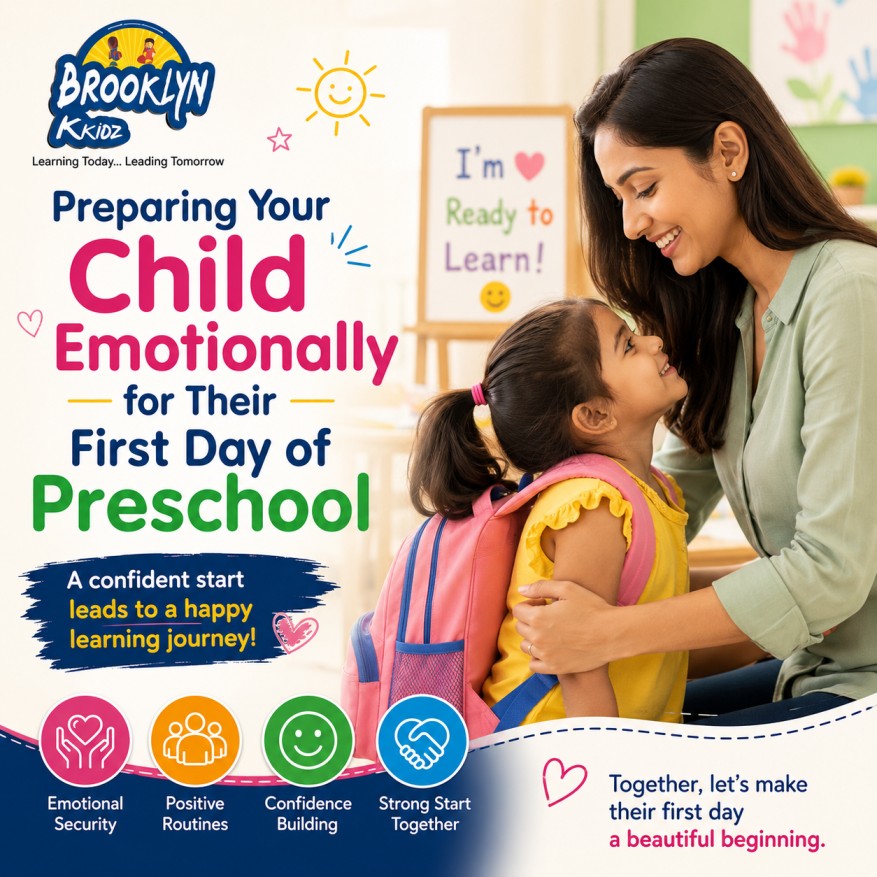
How to Prepare Your Child Emotionally for Their First Day of Preschool
The first day of preschool is a significant milestone, not only for children but also for parents. It marks the beginning of a new journey filled with learning, friendships, creativity, and personal growth. While many parents focus on buying school supplies and choosing the perfect backpack, emotional preparation is often overlooked. Helping your child feel emotionally secure before starting preschool can make the transition smoother and create a positive attitude toward learning.
Every child reacts differently to new experiences. Some eagerly walk into the classroom, while others may feel nervous, shy, or anxious about leaving their parents for the first time. These feelings are completely natural. With patience, encouragement, and the right preparation, parents can help children develop the confidence they need to embrace this exciting chapter.
At Brooklyn Kkidz, we understand that emotional readiness is just as important as academic readiness. Our nurturing environment ensures every child feels safe, welcomed, and valued from their very first day.
Understanding Preschool Anxiety
Starting preschool introduces children to an unfamiliar environment, new teachers, and classmates they have never met before. For many children, this may be their first experience spending several hours away from home. As a result, they may express emotions such as clinginess, crying, fear, or hesitation.
Rather than viewing these emotions as a problem, parents should recognize them as a normal part of development. Acknowledging your child’s feelings helps them build emotional resilience and trust.
Talk Positively About Preschool
Children often reflect the emotions of their parents. When parents speak positively about preschool, children begin to view it as an exciting place instead of something to fear.
Share stories about making friends, painting colorful pictures, singing songs, reading books, and playing fun games. Describe preschool as a place where children learn through exploration rather than pressure. Maintaining an enthusiastic tone helps build excitement and curiosity before the first day arrives.
Establish a Consistent Daily Routine
Young children feel more secure when they know what to expect. A predictable daily schedule prepares them mentally for school life.
Begin following the school wake-up time, meal schedule, nap routine, and bedtime several weeks before preschool starts. Familiar routines reduce stress and help children adjust more comfortably to their new environment.
Encourage Independence Before School Begins
Simple daily responsibilities can significantly boost a child’s confidence before starting preschool. Encourage your child to dress independently, wash their hands, organize their toys, eat without assistance, and carry their own small backpack.
These everyday achievements help children feel capable and prepared for classroom routines while reducing anxiety about doing things on their own.
Visit the Preschool Before the First Day
Whenever possible, take your child to visit the preschool before classes begin. Walking through the classrooms, meeting teachers, seeing colorful learning spaces, and exploring the playground helps replace uncertainty with familiarity.
Children who become familiar with their surroundings before their first day often feel more relaxed and confident when school officially begins.
Read Books About Starting Preschool
Storybooks are wonderful tools for helping children understand new experiences. Reading books about the first day of preschool allows children to relate to characters experiencing similar emotions.
After reading together, encourage your child to share how they think the characters felt and ask whether they have similar feelings. These conversations help children express emotions more openly.
Practice Short Goodbyes
Many parents unintentionally increase separation anxiety by making long, emotional farewells. Instead, practice short periods of separation before preschool begins.
Leave your child with trusted family members or friends for brief periods while reassuring them that you will always return. This gradually builds trust and reduces fear associated with saying goodbye.
Stay Calm During Drop-Off
Children naturally observe their parents’ emotions. If parents appear anxious or emotional, children often mirror those feelings.
On the first day, maintain a calm smile, offer a warm hug, reassure your child that you will return soon, and leave confidently. Although it may feel difficult, prolonged goodbyes usually make the transition harder for children.
Celebrate Small Achievements
The first few weeks of preschool are filled with new experiences. Celebrate every milestone, whether your child made a new friend, completed an art activity, participated in circle time, or simply entered the classroom with confidence.
Positive reinforcement helps children associate preschool with achievement and happiness rather than fear.
Maintain Open Communication Every Day
When your child returns home, create opportunities for conversation rather than asking only whether they had fun. Encourage them to talk about what made them smile, what surprised them, who they played with, or what they learned.
Listening without judgment strengthens emotional security and helps parents identify any concerns early.
How Brooklyn Kkidz Supports Every Child’s Emotional Journey
At Brooklyn Kkidz, we understand that every child adjusts at their own pace. Our experienced educators create a warm, caring, and welcoming environment where children feel emotionally safe from the moment they enter the classroom.
Through play-based learning, engaging activities, positive encouragement, and gentle guidance, we help children build confidence, develop friendships, and enjoy every step of their preschool journey. Our teachers work closely with parents to ensure each child experiences a smooth and joyful transition into school life.
Final Thoughts
Preparing your child emotionally for preschool is one of the most valuable gifts you can give them. While the first day may bring a mix of excitement and nervousness, consistent encouragement, positive communication, and supportive routines help children develop confidence and resilience.
Every smile, every new friendship, and every small achievement becomes the foundation for lifelong learning. By working together, parents and educators can create a nurturing environment where children feel secure, valued, and excited to discover the world around them.
At Brooklyn Kkidz, we are committed to making every child’s first preschool experience positive, memorable, and filled with joyful learning.
Frequently Asked Questions (FAQs):
1.What is the best age to start preschool?
Most children begin preschool between the ages of 2.5 and 4 years, depending on their emotional, social, and developmental readiness.
2.How long does it take for children to adjust to preschool?
Most preschoolers adapt within two to four weeks, although every child progresses at their own pace.
3.Is crying on the first day of preschool normal?
Yes. Crying is a natural response to separation and unfamiliar surroundings. With patience and reassurance, most children quickly become comfortable.
4.How does Brooklyn Kkidz help children settle into preschool?
Brooklyn Kkidz provides a caring, play-based environment where experienced teachers support children emotionally, encourage friendships, and help them build confidence through engaging daily activities.
What is the best age to start preschool?
Most children begin preschool between the ages of 2.5 and 4 years, depending on their emotional, social, and developmental readiness.